Bushfire-prone land: BAL ratings and deck design
A BAL is not a mood and a timber sample is not a system. AS 3959 from BAL-LOW to Flame Zone, ember traps, combustible decking, stairs, and when the lot needs an assessor.
By Custom Decking editorialUpdated 11 August 2025
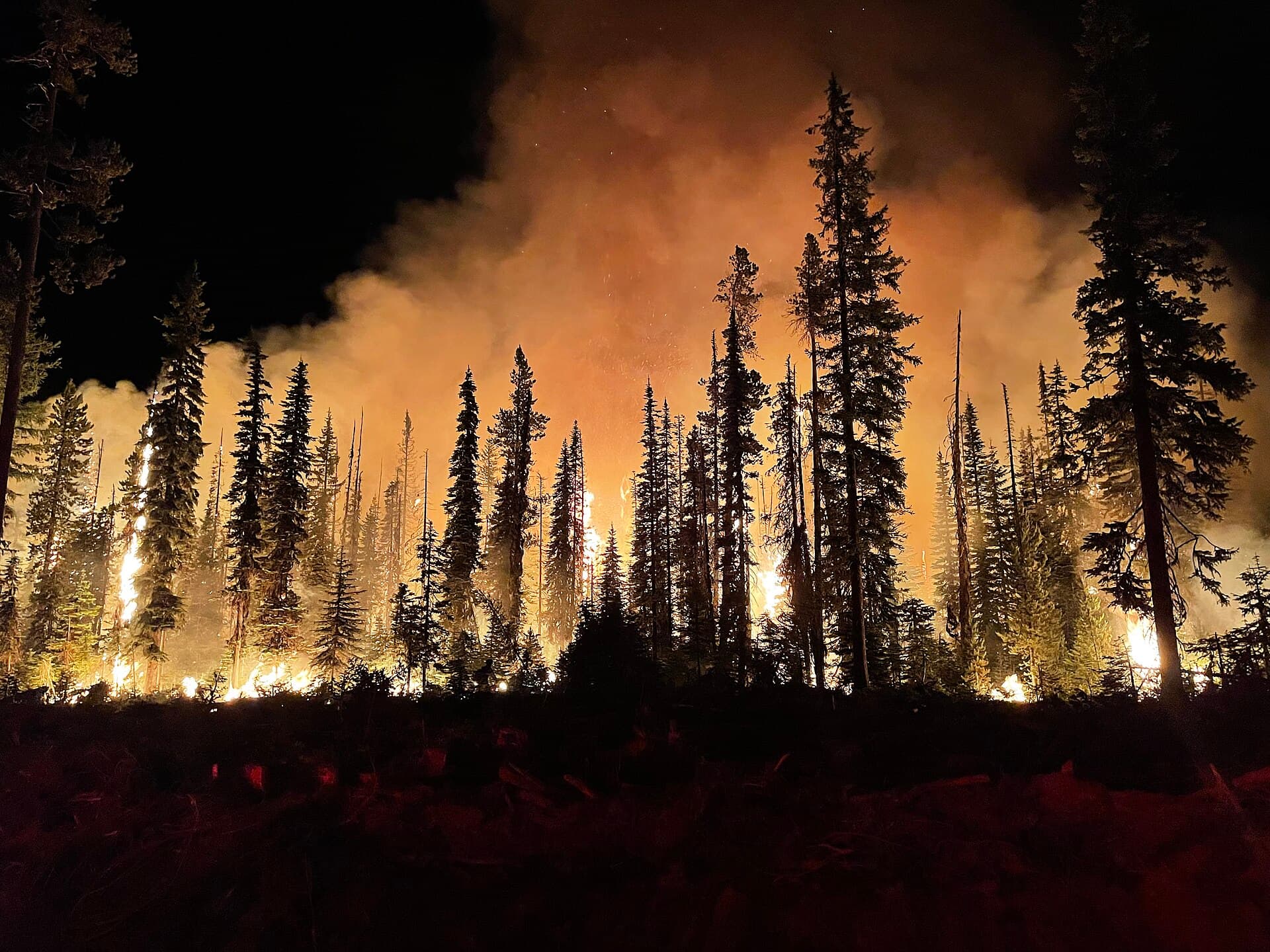
Bushfire design is not a finish. It is a construction system that starts with a number on a site and ends with the last gap against the wall. A handsome hardwood deck can be the right wearing surface in BAL-29 country if the species is listed, the subframe matches, the stairs do not become a wick, and the underside is not a storeroom of kindling. The same hardwood on the wrong joists, with a leafy ember trap at the ledger, is a well-made ignition path. The Australian Standard that governs this is AS 3959. The National Construction Code points to it. Your council’s overlay decides whether you are in the conversation at all.
This essay belongs in design and planning, next to climate and structure. Species listings live in Australian hardwoods for decks. Approvals sit in council approvals, DA and complying development. If someone is trying to sell a polymer board as a fire shortcut, read composite versus timber decking with a sceptical pencil.
What a BAL actually is
BAL means Bushfire Attack Level. It is a prediction of the exposure a building would face from a design bushfire: radiant heat, ember attack, and, at the top of the scale, flame contact. The levels in AS 3959 are BAL-LOW, BAL-12.5, BAL-19, BAL-29, BAL-40 and BAL-FZ (Flame Zone). The number is a radiant-heat figure in kilowatts per square metre, except for LOW and FZ, which are categories rather than a simple heat flux.
BAL-LOW means the mapped risk did not produce a measurable attack level under the method — it is not a poetic way of saying there is no fire in the landscape. BAL-12.5 and BAL-19 are ember-and-heat country, which is most of the inhabited bush interface. BAL-29 is a serious construction level. BAL-40 is more so. Flame Zone means flame contact is expected and ordinary deemed-to-satisfy deck detailing is no longer a catalogue exercise.
The method behind the number looks at vegetation type, the effective slope under that vegetation, and the distance from the vegetation to the building. A site can have different BALs on different elevations. A deck that hangs toward the bush can inherit a worse number than the street facade. Do not apply a front-of-house BAL to a rear platform that sits over a gully.
How the number is made, and who makes it
Mapped bushfire-prone land is the trigger. New South Wales, Victoria, Queensland and the other states publish maps. Being on the map does not tell you the BAL. It tells you that a BAL must be determined if you are building.
A competent assessor — often a bushfire consultant, sometimes a building surveyor working inside the standard — walks the site, classifies the vegetation, measures slope and distance, and writes the level. In Victoria a Bushfire Management Overlay can also demand a bushfire management statement and planning conditions that go beyond the construction standard. In New South Wales, Planning for Bush Fire Protection sits beside AS 3959 for many applications; a CDC or a DA in mapped country has to satisfy that document as well as the Building Code. Queensland uses state mapping and the planning policy on natural hazards, then the building approval still wants a construction level.
You need an assessor when there is no current report that covers the work, when the vegetation or the building outline has changed, or when the deck pushes toward fuel that the original house assessment did not contemplate. You also need one when the file on the house is a guess someone wrote in a hurry in 2011. Reusing a stale BAL to save a week is how a certifier rejects the job, or worse, how an insurer does.
This journal does not issue BALs. If the lot is mapped, budget the assessment before the mood board.
Combustible and non-combustible wearing surfaces
AS 3959 treats decking as part of the building envelope, especially where the deck is attached or where it can carry fire to the wall. At the lower BALs, ordinary timber decking is widely used, with the rest of the house still detailed for embers. From BAL-29 the standard gets particular about what the wearing surface may be. Bushfire-resisting timbers listed in Appendix F — spotted gum, blackbutt, merbau, silvertop ash and others on that list — are the usual timber answer. Non-combustible surfaces (certain steels, some aluminium systems, concrete, some tested mineral boards) are the other answer.
Appendix F is not a vibe and it is not “any hardwood”. The species has to be the species. A mixed parcel labelled “hardwood decking” is not a listing. Thickness and gap limits in the current standard matter; we are not going to reprint a table that is amended from time to time. Open the edition your surveyor is using and write those limits on the drawing.
BAL-40 and Flame Zone squeeze timber further. Many attached decks at those levels become non-combustible wearing surfaces on a supporting system that also meets the section. A performance solution is possible. It is not a conversation you have with a timber yard. It is a conversation you have with a fire engineer and the surveyor.
Composite and plastic boards are combustible unless a specific test report says the product may be used at that BAL. Do not accept a brochure photograph of a bush block. Ask for the test, the BAL it supports, and whether the subframe is included. Treated pine as a wearing surface is the wrong conversation at BAL-29 and above; as a hidden joist it may also be the wrong conversation. The standard cares about supporting members, not just the pretty face.
Ember traps
Most houses that ignite in bushfire weather ignite from embers, not from a wall of flame. Embers lodge in gaps, in leaf-filled valleys, against a wall, under a doormat, in a stair stringer, and in the dead space under a low deck. A deck is a manufactured ember landscape if you detail it lazily.
Keep board gaps within what the standard allows for the BAL — tight enough to deny embers a nest, open enough that the board can still move and drain. Do not close a gap with a rubber strip that becomes a fuel. Do not leave a wide decorative gap against the house “for drainage” and then pack it with leaves. The wall junction wants a flashing and a gap strategy that a surveyor can follow, not a foam rod and a hope.
The underside is the larger trap. A deck within a few hundred millimetres of the ground, boxed in with slats, full of old pots and a woodpile, is a furnace waiting for a spark. Either enclose the subfloor the way the standard asks — with the right material and the right vents — or keep it open, cleanable, and free of storage. “We will tidy it before summer” is not a construction detail.
Gutters on a roofed deck, the valley where the deck meets a stair, and the back of a bench seat are the same problem at a smaller scale. Design surfaces that can be blown out with a broom. If a leaf can stay there all December, an ember can stay there for a minute, which is long enough.
Stairs, undersides and stored junk
Stairs are vertical kindling if they are the wrong timber at the wrong BAL, or if the treads have open backs that collect litter. AS 3959 has construction requirements for stairs and for the deck they serve; stairs, landings and safe access still applies for the ordinary safety rules. In bushfire country you are writing both. A handsome open-riser hardwood stair on the bush elevation can be the first thing that goes, and it can take the deck with it.
Handrails and balustrades are part of the same system. Combustible rails may be limited by BAL. Glass and metal have their own fire and barrier jobs. Do not invent a cedar cap on a BAL-40 deck because the interior designer liked it.
The junk under the deck is not a joke. Gas bottles, firewood, mulch piled against posts, a trailer with a canvas cover — these convert a compliant structure into a fuel load the assessor did not model. The household has to live the rating. A perfect specification with a woodheap against the stringers is a paper compliance.
The wall, the posts and the rest of the frame
A BAL-rated board on a BAL-ignorant frame is a sample, not a deck. Supporting members, posts, and the way the deck meets the wall are written into the relevant section of AS 3959 for each attack level. That can mean non-combustible posts, or bushfire-resisting timber, or a wrapping and height rule for an otherwise combustible post. It can mean a no-go on a simple pine ledger into a weatherboard wall.
Footings, stumps and posts still govern the hole in the ground. The BAL governs what stands in the air. Termite management still applies; fire detailing that wraps a post can conflict with an inspection face if nobody coordinates the two. Termites and deck construction is not cancelled by a bushfire overlay.
Sarking, ember screens on vents, and the house’s own BAL work have to meet the deck. A new platform that dumps leaves into a compliant weephole is a renovation that undid the last one.
Approvals sit on top of the BAL
A BAL report is not a permit. In mapped country you may need a planning approval, a bushfire management plan, a variation, or a referral to a rural fire authority, depending on the state and the overlay. New South Wales complying development has bushfire limits; many lots drop out of CDC and into a DA once the BAL or the mapping bites. Victoria’s building permit will want the BAL on the drawings; the planning permit may want more. Queensland building approval still wants the construction level even when the planning side is accepted development.
Write the BAL, the species, the product names, the gap, and the subfloor treatment on the drawings the certifier will stamp. “Hardwood deck, bushfire timber” is how a merbau of unknown origin lands on a BAL-29 house that was quoted in spotted gum. Choosing a deck builder includes asking whether they have finished a job at this attack level, not whether they have a nail gun.
Designing inside the rating
Start with the map and the assessment. Then pick a wearing surface that is legal at that BAL. Then detail the gaps, the wall, the stairs and the underside so that embers have nowhere cheap to sit. Then decide whether the household will keep the litter down. A Flame Zone lot may not want an attached timber deck at all; a detached platform down the slope with a non-combustible link can be the saner plan.
Bushfire architecture can still be a pleasant deck. It cannot be a copy of an inner-suburban detail with a different oil. If a listing, a BAL definition or an approvals note in this piece has moved, send the current clause through contact. We correct against AS 3959 and the planning instrument, not against a yard story. The rules we edit to are on editorial standards. The fire photograph is credited on image credits.
Questions readers ask
- Can I use ordinary timber decking if my block is bushfire-prone?
- It depends on the BAL, not on the suburb name. BAL-LOW and the lower attack levels still allow timber in many details. From BAL-29 upward the wearing surface, the gaps and the supporting members are restricted, and Flame Zone is a different class of problem. Read the BAL report and AS 3959, not a colour chart. Spotted gum on untreated pine joists is not a system.
- Do I need a bushfire assessor for a small attached deck?
- If the land is mapped bushfire-prone, the deck is part of the building for construction purposes and someone has to assign or confirm a BAL. That may be an existing report on the house file, a new site assessment, or a planning document such as a Victorian bushfire management statement. A Saturday deck that ignores the overlay is how a cheap job becomes an uninsurable one.
- Are composite boards a way around a high BAL?
- Only if that specific product has been tested and accepted for the attack level on the lot. A wood–plastic board is still a combustible recipe until a test says otherwise. Many composites sold for low maintenance have no useful BAL story. Start from the rating and work toward a listed timber or a non-combustible surface, not from a showroom sample.
Keep reading
Related essays
Council approvals, DA and complying development for decks
When a deck is exempt, when New South Wales uses CDC or a DA, when Victoria wants a building permit, how Queensland treats accepted development, and why heritage, flood and bushfire overlays change the path. Not legal advice.
Privacy, neighbours and dividing fences when you add a deck
A raised deck invents new sightlines. Overlooking, screens, fence height, and the dividing fences acts in New South Wales, Victoria and Queensland — in general terms — plus the conversation you have before the first post.
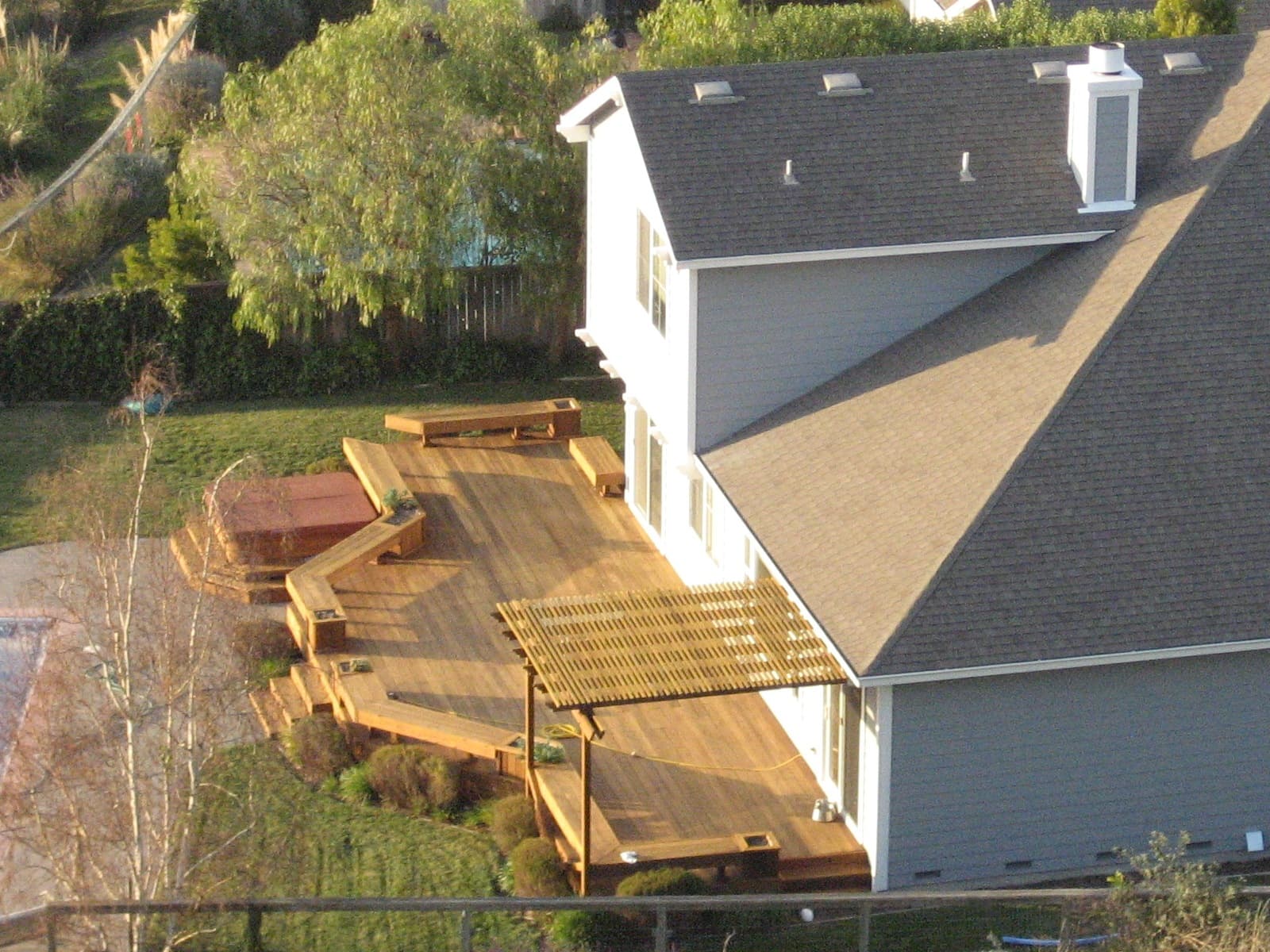
Multi-level decks for sloping Australian blocks
A slope is a plan, not a problem to bury. Cut and fill versus poles, split levels as outdoor rooms, retaining, stairs you can live on, and drainage that leaves the downhill neighbour dry.