Composite versus timber decking in Australian climates
Composite boards promise less oiling. In Australian sun, salt and wet seasons they still heat, fade, grow mould and expand. A clear-eyed comparison over a fifteen-year life, not a brochure weekend.
By Custom Decking editorialUpdated 15 September 2025
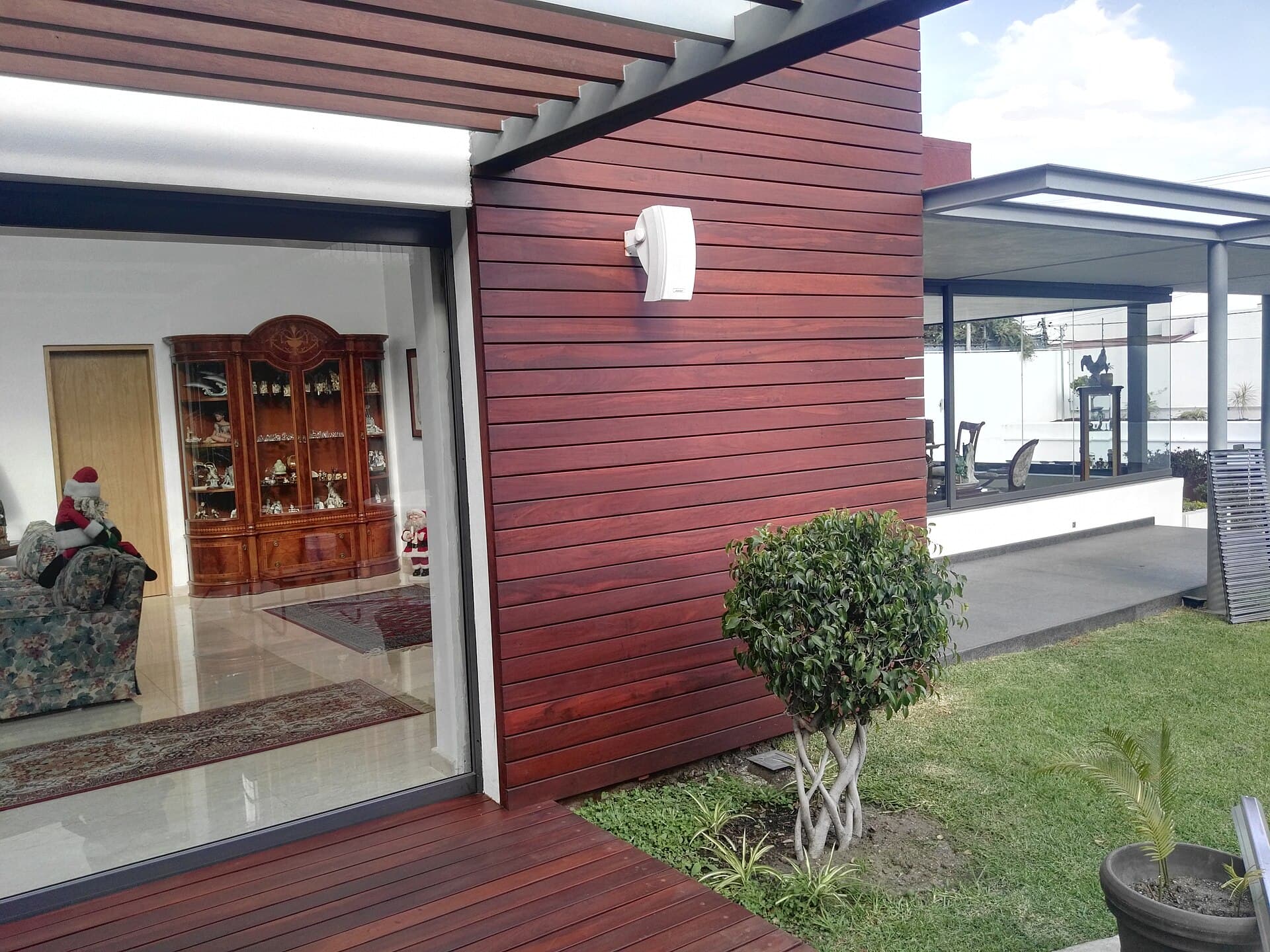
Composite decking arrived in Australian yards with a simple pitch: stop oiling. The pitch is half true. You do stop the ritual of penetrating oil every spring. You do not stop heat, ultraviolet light, mould in a damp court, thermal expansion on a long run, or a warranty booklet that reads like a list of the climates we actually live in. This is a comparison for households choosing a wearing surface, not a verdict that one material is finished.
The timber and materials hub is the right shelf for that choice. If you already know you want a eucalypt, start with Australian hardwoods for decks. If the site is salt and wind, keep coastal decks open while you read. Care after handover still matters either way; the timber half of that work is in oiling and maintaining a timber deck.
What a composite board actually is
Most boards sold here as composite are a wood–plastic mix: timber fibre or flour bound in polyethylene or polypropylene, often with a thin polymer cap on the wearing faces. The cap is there because the first generation faded, stained and grew mould in a way that embarrassed the catalogues. Capped boards behave better. They are still a plastic product with a timber filler, not a timber product with a plastic coat.
A smaller group is foamed or solid polyvinyl chloride, or a recycled-plastic board with no wood in it. Those expand more, feel different underfoot, and are sometimes sold into wet tropical and poolside work. Do not let a salesperson collapse all of this into the word “composite”. The fastener, the gap, the heat and the fire test change with the recipe.
Under the boards, the structure is usually still timber. Composite does not exempt you from joist spans under AS 1684, from H3 or H4 treatment where the frame needs it, or from a termite conversation. Some systems want closer joist centres than a 19 millimetre hardwood. Some want their own aluminium substructure. Read the span table on the product you are buying, not the span table from the last timber deck.
Heat
Australian summer sun on a dark polymer surface is not a theoretical problem. It is a barefoot problem. Dark grey and charcoal boards, which are the colours people pick from a sample in an air-conditioned showroom, can become unpleasant to walk on after midday on a north or west elevation. Timber gets hot too. Dense hardwood in full sun will make you hop. Polymer boards, especially capped ones with a dark skin, often get hotter and stay hotter because they do not buffer heat the way a dense, slightly moist eucalypt can.
Light colours help and look dirty faster. Shade helps more. A pergola or a tree that is allowed to stay is a materials decision as much as an architectural one. If the deck is a western platform with no shade and children who live outside, ask the supplier for a temperature claim they will put in writing, then put a sample on the actual slab for a January afternoon. Marketing photographs are taken at ten in the morning.
Fade
Early wood–plastic boards in this country faded to a chalky, uneven beige that no one had ordered. Capping improved that. It did not repeal ultraviolet light. A north-facing run in Alice Springs or a west-facing run in Perth will lighten. A south-facing court in Hobart may still look close to the sample in year five. Warranties that say “stain and fade” usually define fade as a measured delta, not as “still the colour you pointed at”. Read the number and the test method if they print one. If they do not, treat the colour as a starting point.
Timber changes too. Hardwood silvers, oil darkens, and a neglected oil job goes patchy. The difference is that timber’s change is widely understood as weathering. Composite’s change is widely sold as not happening. Plan for a shift. If the house is a tight colour scheme, a timber you intended to silver may be more honest than a polymer you intended to stay charcoal.
Mould, algae and the myth of the hose-down
Composite does not feed decay fungi the way untreated sapwood does. It does grow surface mould and algae, especially in Melbourne winter shade, a Brisbane south court that never dries, or any deck under a leaking downpipe. The cap can be slightly textured for slip resistance. Texture holds spore and silt. A pale board shows it. A dark board hides it until it is slippery.
This is a climate and care problem as much as a materials one. You will wash. You may need a product the warranty allows — and many warranties void themselves if you reach for the wrong pressure washer or a solvent that clouds the cap. Timber wants oil and an occasional clean. Composite wants a cleaner that does not void the booklet, used often enough that the film never becomes a slip hazard. Mould, algae and the slip they leave on a textured cap are a washing problem, not a reason to pretend the surface is inert.
Expansion
Polymers move with temperature more than dry hardwood moves with temperature. They also move with temperature more than they move with moisture, which is the opposite of timber. A long composite board on a forty-degree afternoon will grow. Overnight it will shrink. The manufacturer’s end-gap and abutment details exist because of that, not because a draftsman liked a shadow line.
Australian practice that ignores those gaps — butting boards tight to a wall, running a continuous length past a corner without a break, fixing too close to the end — produces peaked boards, popped clips and a noise like a clicking radiator as the sun comes around. In a tropical wet season the same boards can also take a little moisture through cut ends and the core. Seal what the manufacturer tells you to seal. Do not assume a hardwood end-wax is the right chemistry.
Hidden clip systems are the usual fix. They allow movement along the joist if they are installed as a system. A hybrid job that mixes clips, face screws and a tight abutment is how you get a wave.
Fire
AS 3959 does not have a chapter titled “composite looks like wood, so it is wood”. Bushfire-resisting timbers are named species. Non-combustible surfaces are tested as such. A wood–plastic board is, in most formulations, a combustible product with a plastic component. Some manufacturers have tested particular boards to particular BAL levels. Many have not. A lot of suburban composite is sold into BAL-LOW and BAL-12.5 country and should stay there.
If the lot is mapped BAL-29 or above, do not start with a composite sample. Start with the overlay, the BAL essay, and a surface that is either a listed timber or a non-combustible system — aluminium, some porcelain-on-pedestal builds, a concrete terrace. Then, if a composite product has a test report that a certifier will accept for that BAL, you can have the conversation. The report, not the brochure photograph of a bush.
House fires and barbecue flare-ups are a lesser, separate point. Ember and radiant heat are the mapped problem. A polymer board that melts or drips is not a gift in either scenario. We do not invent a test we have not read. We do say: ask for the test, and keep the fire pit on a non-combustible hearth regardless of the wearing surface. That last point belongs with the hearth, not with the wearing surface.
Coastal air
Salt does not rot a polymer cap. That is the genuine coastal advantage. A hardwood deck at the beach is a fastener and oiling problem as much as a timber problem; a composite deck at the beach is still a fastener problem. Stainless clips and screws, 316 in true marine exposure, are not optional because the board will not decay. The clip will. The joist will, if it is timber. The ledger will.
Some caps stain from ferrous dust, from charcoal, from certain sunscreens and from tannin dripping off coastal trees. Some warranties exclude “coastal” or define it as a distance from surf that your block sits inside. Read that sentence. A product that is happy in Geelong may not be warranted on a dune in Broulee.
Cost over fifteen years
We will not invent a dollar figure. Prices move, and a spotted-gum metre in 2024 is not a spotted-gum metre in 2026. What can be said without a fake spreadsheet:
Composite usually costs more in the board, sometimes more in the substructure if joist centres tighten, and less in oil and in the weekends you would have spent on oil. Timber usually costs less in the board if you stay with a standard east-coast hardwood, more in finish and in the labour of finish, and less when a single board is damaged and the local yard can match it on Thursday.
Over fifteen years a well-built hardwood deck that was oiled when it needed oil is still a hardwood deck. Over fifteen years a composite deck is still a composite deck if the cap was not breached, the clips still hold, the colour shift is acceptable, and the company that wrote the warranty still exists. That last clause is not cynicism. It is how long outdoor products live relative to the firms that import them.
Replacement is the hidden cost. A damaged hardwood board unscrews. A damaged clipped composite board can be a sequence of unclipping that the original installer remembers and the new one does not. Ask how a middle board comes out. If the answer is vague, the fifteen-year cost is vague.
Recycling at end of life is not a strength of wood–plastic. The mix is awkward for ordinary plastic recycling streams, and Australian drop-off points for this specific waste are not a network you can assume. A timber board can be reused, cut down, or burnt where burning is lawful. A composite board more often waits for landfill. If end-of-life matters to the household, say so before the sample leaves the shop. Bamboo, aluminium and the other non-timber options carry the same warranty and waste questions.
When composite wins
Composite wins on a rental property where no one will oil, and the landlord wants a surface that looks even in year four without a painter. It wins on a small, shaded courtyard where mould is manageable with a wash and heat is not a January crisis. It wins around some pools, if the chemistry exclusions are clear and the surface is not a dark west-facing apron. It wins for a household that will pay more now to avoid the oiling calendar, and that has read the washing calendar.
It can win on a waterproofed roof terrace when the manufacturer’s system is designed to sit over a membrane without fixing through it — though porcelain on pedestals is often the more honest product for that job, and the waterproofing of the room below should lead, not the wearing surface.
It does not win because it is “sustainable” in the abstract. Wood fibre plus virgin or mixed plastic plus a shipping container is a carbon story that needs numbers the salesman rarely has. Local hardwood from a documented mill is a different story. Compare documents, not adjectives.
When timber still wins
Timber wins in mapped bushfire country unless a specific composite has a test the certifier likes. It wins on a western entertaining deck where bare feet are the point and a shade structure is in the budget. It wins when a board will be cut, recut, stained, repaired and eventually replaced by a local carpenter who does not stock a proprietary clip. It wins when the household likes timber and is willing to practise a maintenance rhythm rather than outsource the idea of maintenance to a warranty.
It wins on cost for many ordinary suburban platforms if the species is a stock hardwood and the frame is ordinary treated pine, correctly specified. It wins on repair. It wins on the honest ageing that Australian houses already know how to live with.
Timber loses when the household will not touch it after handover and the climate is hard — tropical wet, deep shade, a holiday house that is closed for months. In those jobs a neglected hardwood looks worse than a washed composite. The material did not fail. The brief did.
Choosing without the brochure
Put a sample of each finalist on the site for a week of the weather you actually have. Walk on them at 3 pm. Wet them. Leave a leaf on them. Read the warranty exclusions for coastal, pool, commercial and “failure to maintain”. Ask the builder which system they can repair in five years without a representative flying in.
Then choose a wearing surface that matches the household, the overlay and the sun. Composite is a real product. Timber is a real product. The climate is not a showroom, and Australian sun is not a clause you can negotiate. If you want a second opinion from a builder who has laid both, ask for a quote that names the system and the repair path. Corrections to this comparison go through contact; the documents we prefer are set out in editorial standards.
Questions readers ask
- Is composite decking really maintenance-free in Australia?
- No. You stop the annual oiling, and you start washing, managing mould in shade, watching end-gaps in heat, and reading a warranty that still wants a maintenance record. The labour changes. It does not vanish.
- Can I use composite decking in a bushfire-prone area?
- Only if the specific product has been tested and accepted for the BAL on the lot, which many wood–plastic boards have not. AS 3959 is not impressed by a wood-look. If the overlay is BAL-29 or above, start with bushfire-resisting timber or a non-combustible surface and work backwards.
- Does composite work better around a pool than timber?
- It can, because it does not splinter and it does not drink chlorinated splash the way an open-grain board can. It can also become too hot to cross in January, and some formulations stain or lose warranty near pool chemicals. Test a sample in the actual sun and read the chemical exclusions before you buy a whole coping run.
Keep reading
Related essays
Imported hardwoods versus Australian-grown timber
Merbau, keruing and the other imported boards can be honest. They can also be illegal, unstable in Australian sun, or a missed job for a local mill. How to tell the difference.
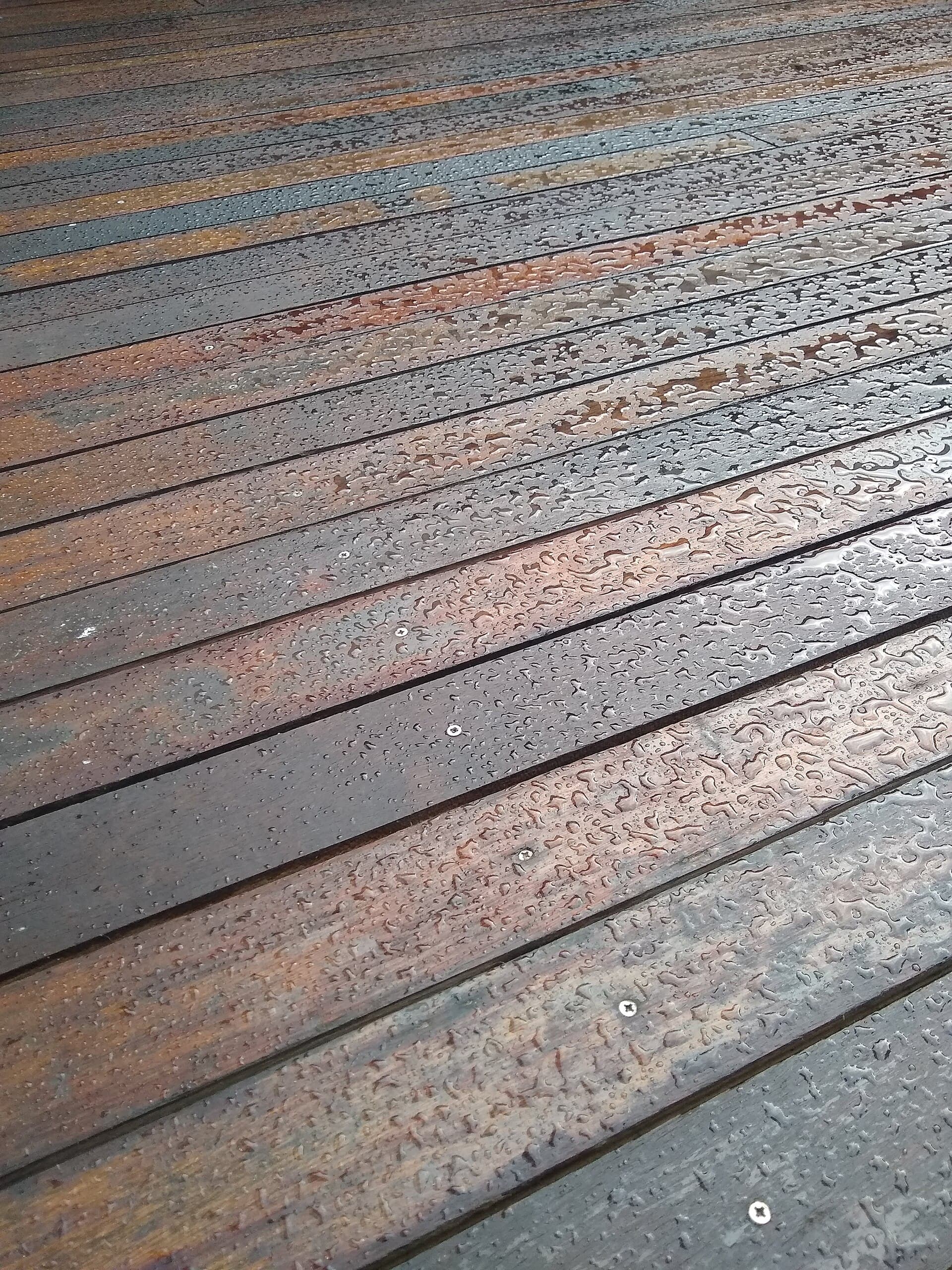
Bamboo, aluminium and the other decks people ask about
Strand-woven bamboo, aluminium boards, porcelain on pedestals and recycled plastic all turn up in Australian quotes. What they actually are, where they fail, and the warranty clauses that matter.
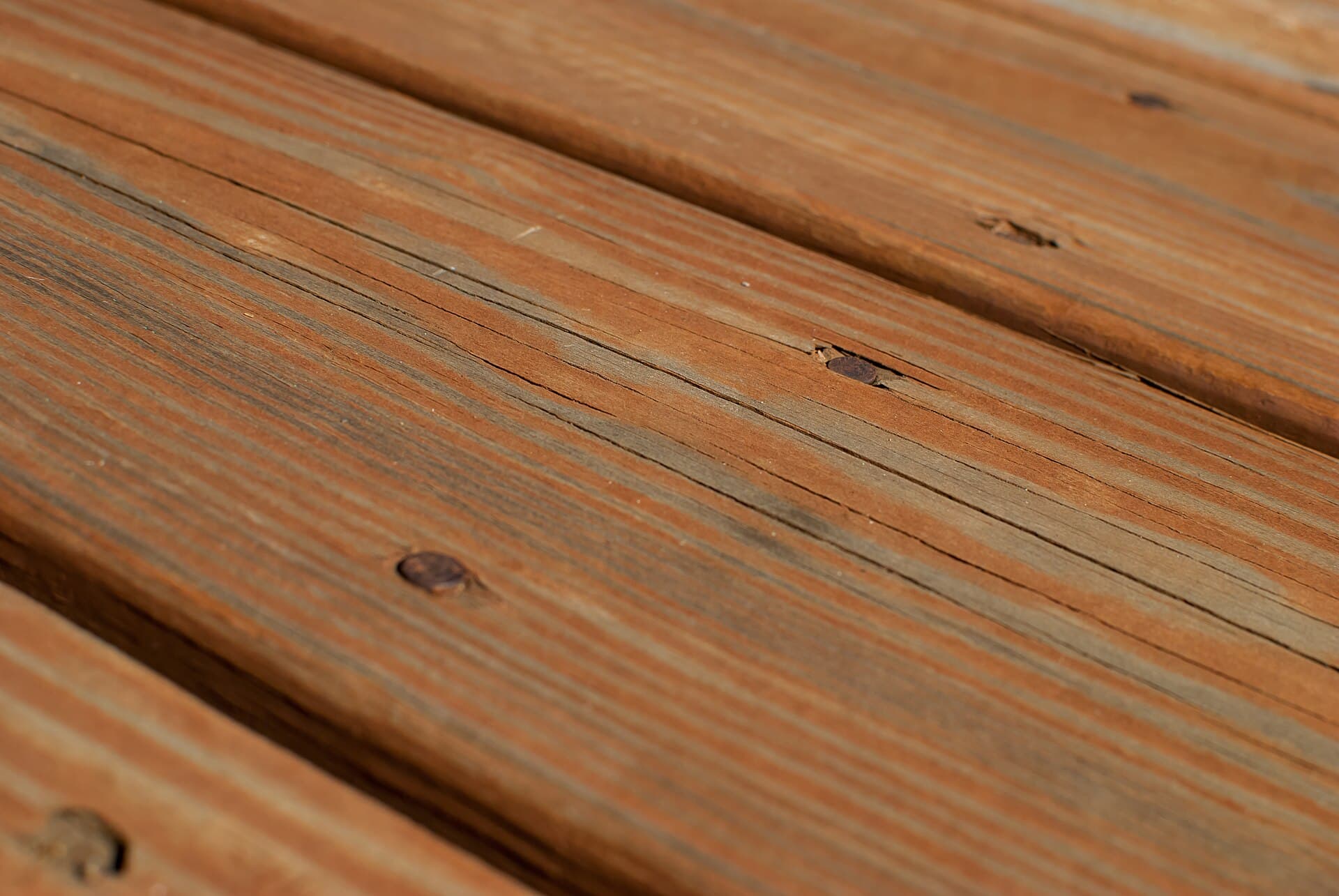
Choosing decking boards and hidden fasteners
Width, profile, gap, screw alloy and clip system decide whether a deck stays flat. A practical Australian guide to 86 and 140 boards, reeded faces, stainless against coated screws, and end-sealing.