Coastal decks: salt, wind and corrosion on the Australian seaboard
Salt does not care what the brochure promised. Stainless grades, wind classification, merbau versus spotted gum at the beach, glass that etches, and a wash-down interval you will actually keep.
By Custom Decking editorial
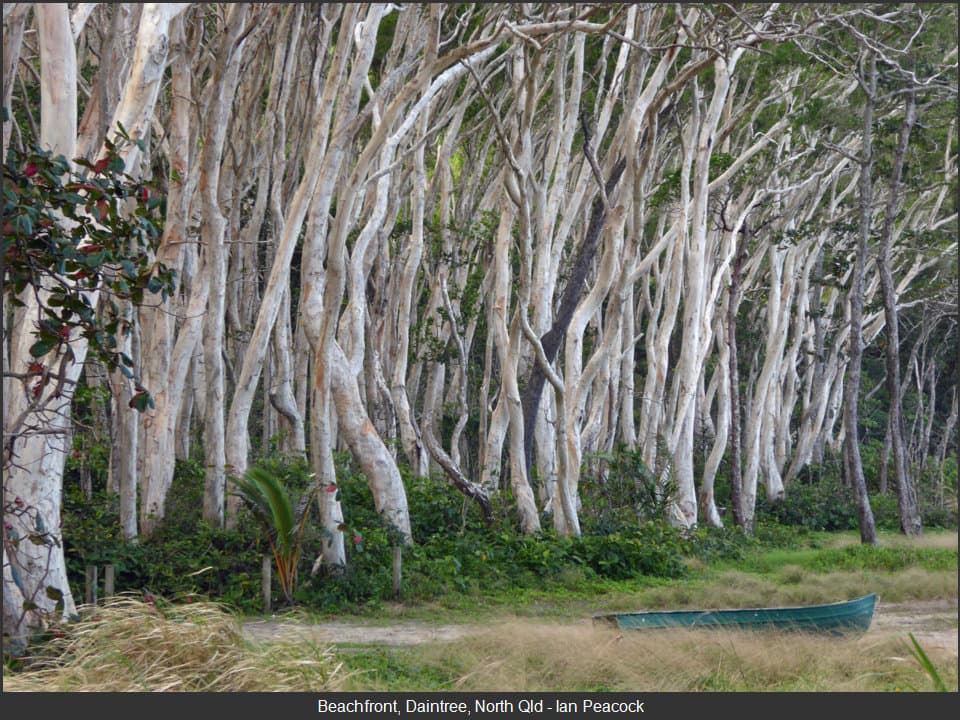
A coastal deck is a marine object that happens to be attached to a house. The wearing surface can be a perfectly good hardwood. The job still fails if the screws are the inland grade, the glass hardware is decorative, the posts were boxed in without drainage, or nobody hoses the salt off after a blow. Distance from breaking surf is the first measurement. Species is the second. The furniture catalogue is not on the list.
This sits in design and planning and leans on climate and care and timber and materials. Read choosing decking boards and fasteners before you accept “stainless” as a specification — stainless is a family. If the lot is also a Queensland wet-tropics site, pair this with tropical Queensland decks. If there is a pool, poolside decks, drainage and chemicals is the chemical half of the same corrosion story.
Distance from the surf is the first number
Corrosivity on the Australian coast is not a vibe. Standards such as AS 4312 describe atmospheric zones that get rapidly worse as you approach breaking surf, exposed headlands and off-shore salt. A house behind a dune is not the same as a deck on the seaward side of the dune. A canal frontage in still water is not an ocean frontage. A south-coast winter westerly carries different salt than a dry south-easterly on a Sydney afternoon, but both will find the wrong alloy.
Ask how far the structure sits from the line where waves actually break, not from the suburb name on the estate. Fifty metres can be a different world from two hundred. A “coastal” quote that was written for a job behind the highway will under-specify the front row. If the builder has not walked the site on a windy morning, they are guessing the zone.
The National Construction Code and the steel-protection standards that sit under it expect you to pick an environment and then pick coatings and alloys that match. That is not pedantry. It is why a galvanised joist hanger that looks honest in Ballarat becomes a rust bloom in Cottesloe.
Wind is a structure problem first
Onshore wind is the force that lifts umbrellas, rattles glass, and turns a deep joist field into a sail if the perimeter is sheeted without a plan. Residential sites are classified for wind under AS 4055 — the N and C ratings that appear on house plans — and the regional wind speeds behind them live in AS 1170.2. Cyclone country (the C ratings, the northern coasts) is a different job from a blustery but non-cyclonic southern beach. Do not copy a Mornington detailing package onto a Cairns waterfront and hope.
A deck adds area. A privacy screen adds more. A solid balustrade on the seaward edge can turn a pleasant platform into a wind catcher that the posts were not sized for. If the house already has a wind classification on the file, the deck inherits it. If it does not, get one before you invent a sail. Balustrades, glass and the NCC is the barrier file; the wind file is the engineer’s.
Comfort follows structure. A glass screen can make a winter courtyard on a south-coast cliff, or it can boom and salt-etch until nobody sits there. Open palings let the wind through and let the view through; they also let the salt through, onto every fastener behind them. Choose the screen for the wind you measured, not the wind you wanted.
Stainless grades are not interchangeable
304 stainless — the 18/8 alloy most people mean when they say “stainless” — is adequate for many inland decks and for mild coastal work well back from spray. It is not marine grade. In chloride-rich air it pits and tea-stains. The stain is iron coming out of the surface; the pits are the start of a failed screw.
316 stainless has molybdenum in it. That is the ordinary marine specification for screws, clips, bolts, joist hangers if they are stainless, and the small brackets that hold a glass fence on. It still stains if it is the wrong surface finish, if carbon steel swarf is left on it after a grinder day, or if it sits in a salt crust. It is not magic. It is the correct starting alloy.
Duplex grades and silicon bronze turn up on boats and on a few carefully specified marine decks. They are not what the hardware aisle is selling. If a quote says “stainless” and the box says 304, and you can hear the surf, send the box back. Hidden clip systems are only as coastal as the clip and the screw that come in the bag. An inland clip with a pretty board is a two-year product.
Do not mix leftover bright zinc screws into a 316 job “just for the blocking”. One carbon-steel fastener in a salt deck becomes a rust beard and a hole. The same rule applies to the cheap coated screws that are sold for treated pine. Those coatings are not a marine system. Treated pine as a frame can be made to work at the coast if the grade, the moisture and the hangers are honest. The wearing-surface screws still want 316.
The rest of the metal
Hot-dip galvanising is a proper coating inland and in mild coastal air. Close to breaking surf it is a delay, not a solution, especially on thin brackets and on cut ends that were never recoated. Powdercoat over mild steel looks finished on handover day and then films of corrosion appear at every chip and every underscrewed cap. If the structure is steel, ask for the corrosivity category, the coating system, and who is responsible for the cut edges. If the answer is a shrug, the answer is no.
Aluminium subframes and aluminium-framed glass are common on coastal houses because the metal itself behaves. The fasteners that join it to timber, and the stainless grade of the small parts, still have to be specified. Bimetallic corrosion — stainless against aluminium in a salt wet joint — is a real detailing problem. Isolate or match the metals. Do not invent a sandwich and hope the powdercoat is a gasket.
Flashings, door tracks and the first course of the house are part of the deck detail. Merbau runoff stains pale aluminium. Rust from a wrong screw stains everything. Salt cakes in a sliding-door track and then the door is the failure people notice, not the deck.
Merbau, spotted gum and the beach
The two boards that keep arriving on coastal quotes are spotted gum and merbau. Both can be honest. Neither is a corrosion strategy.
Spotted gum is the east-coast hardwood default: class 1 above-ground, hard, widely stocked, and listed among the bushfire-resisting timbers in AS 3959 Appendix F. At the beach it will silver fast, check if it was laid wet, and show every cheap fastener. It wants 316, end-sealing, and an oiling cycle shorter than a suburban backyard. It does not want a film-forming paint in western salt sun.
Merbau is more dimensionally stable in a lot of parcels, which is why builders like it on long coastal runs. It is also an import. The legality and the carbon argument belong in imported hardwoods versus Australian-grown timber. The site argument is extractive bleed — rust-brown runoff onto limestone, pale concrete and powdercoat — and the same fastener discipline as any other marine deck. A cheap merbau parcel with no chain of custody is not a coastal upgrade. It is a risk with a tropical colour.
Blackbutt is the pale alternative and it shows rust and tannin more honestly than a dark board. Ironbark will outlast the chairs and punish the drill bits. Jarrah has a western coastal history; supply and grade still have to be real. Composite boards avoid oiling and can make sense around salt splash and bare feet, but they heat, they still need a coastal subframe, and many are not a BAL answer. That comparison is composite versus timber.
Leave the species decision on colour, durability class, fire listing and paperwork. Spend the specification energy on the alloy, the gap and the wash-down.
Glass, salt and the view you paid for
Coastal glass is a maintenance surface. Salt etches if it sits. Stainless spigots and clamps tea-stain if they are 304, or if they are 316 that nobody washes. A frameless glass balustrade on an ocean frontage is a beautiful thing for about six months if the household will not squeegee. After that it is a hazy, streaked cost.
The NCC barrier rules do not relax because the view is expensive. Height, opening sizes, and the way the glass is retained are the same conversation as an inland deck, with a harder environment on the fixings. Laminated and toughened specifications still have to match the wind and the barrier standard. Do not let a glazier who works inland pick the hardware for a headland.
If you cannot commit to washing the glass, pick palings, rods, or a frame that hides the salt a little longer — and still wash the metal. There is no coastal balustrade that is maintenance-free. There are only ones that fail visibly and ones that fail inside the fixing.
Boards, gaps and the wash-down
Salt sits in the gap, in the reeded face, and against the wall. A tight gap that was cut to a brochure minimum becomes a salt and grit joint; the boards then have nowhere to move and the fastener takes the strain. Keep the gaps open and cleanable. Face screws, properly countersunk in 316, are easier to wash and easier to replace than a clip you cannot see when it fails. Hidden clips are fine if they are a marine set and you accept that a failed clip is a fishing expedition.
Wash with fresh water. That is the whole method. High-pressure cowboys scar the grain and drive salt further into the end grain. A hose, a broom, and a habit after rough onshore weather do more than an annual “restoration”. Then oil on a calendar that matches the exposure — often twice in the first year and then whenever water stops beading, which on a north ocean face can be uncomfortably often. Oiling and maintaining a timber deck is the inland rhythm. Shorten it at the beach.
Do not store the kayak, the fish-cleaning table and the leftover reinforcing steel under the deck and then act surprised about corrosion and moisture. The subfloor is part of the marine environment. Leave it open to dry, or enclose it with a detail that can drain and be inspected.
Cyclone country is a different job
From about the central Queensland coast north, and on the north-west of Western Australia, wind is not only salt. It is a cyclonic classification, debris, and a set of tie-down and bracing rules that a southern coastal carpenter may never have built. Screens become sails. Loose furniture becomes missiles. A roofed deck becomes part of the house’s wind system.
Get the wind classification on the drawings. Get an engineer when the span, the height or the roof asks for one. Do not “make it like the last job in Geelong”. The salt detailing in this essay still applies. It is the minimum, not the cyclone design.
A coastal deck that lasts is a boring specification: the right corrosivity call, 316 where it matters, a board you can replace, glass you will wash, and a household that owns the hose. The sea is not an aesthetic. It is the environment.
If a grade, a wind standard or a corrosivity note in this piece is wrong, send the document through contact. We correct against the published standard. The rules we edit to are on editorial standards. The Daintree photograph is credited on image credits.
Questions readers ask
- Is 304 stainless good enough for a beach deck?
- Sometimes, if you are well back from breaking surf, in a sheltered inlet, and honest about wash-down. In the first hundred metres of an ocean frontage, or anywhere you can taste salt on a still morning, specify 316 for screws, clips, brackets and the small hardware on the glass. 304 that stained in year two is not a mystery. It is the wrong grade.
- Is merbau better than spotted gum at the beach?
- Merbau is often more stable and it is listed as bushfire-resisting, which helps on some coastal bush lots. It also bleeds extractives onto pale concrete and it is an import with a paperwork test. Spotted gum is the east-coast default, hard and durable, and it will check in salt wind if it is laid wet and left unoiled. Neither species saves a carbon-steel screw. Choose the board for colour, supply and honesty; choose the alloy for the air.
- How often should I wash a coastal deck?
- Often enough that salt does not sit through a week of still, humid weather. In a true marine frontage that can mean a hose-down after rough onshore days, not a spring clean. Oil on the timber calendar the exposure demands — usually shorter than an inland deck — and do not confuse a salt crust with a finish that is still working.
Keep reading
Related essays
Council approvals, DA and complying development for decks
When a deck is exempt, when New South Wales uses CDC or a DA, when Victoria wants a building permit, how Queensland treats accepted development, and why heritage, flood and bushfire overlays change the path. Not legal advice.
Privacy, neighbours and dividing fences when you add a deck
A raised deck invents new sightlines. Overlooking, screens, fence height, and the dividing fences acts in New South Wales, Victoria and Queensland — in general terms — plus the conversation you have before the first post.
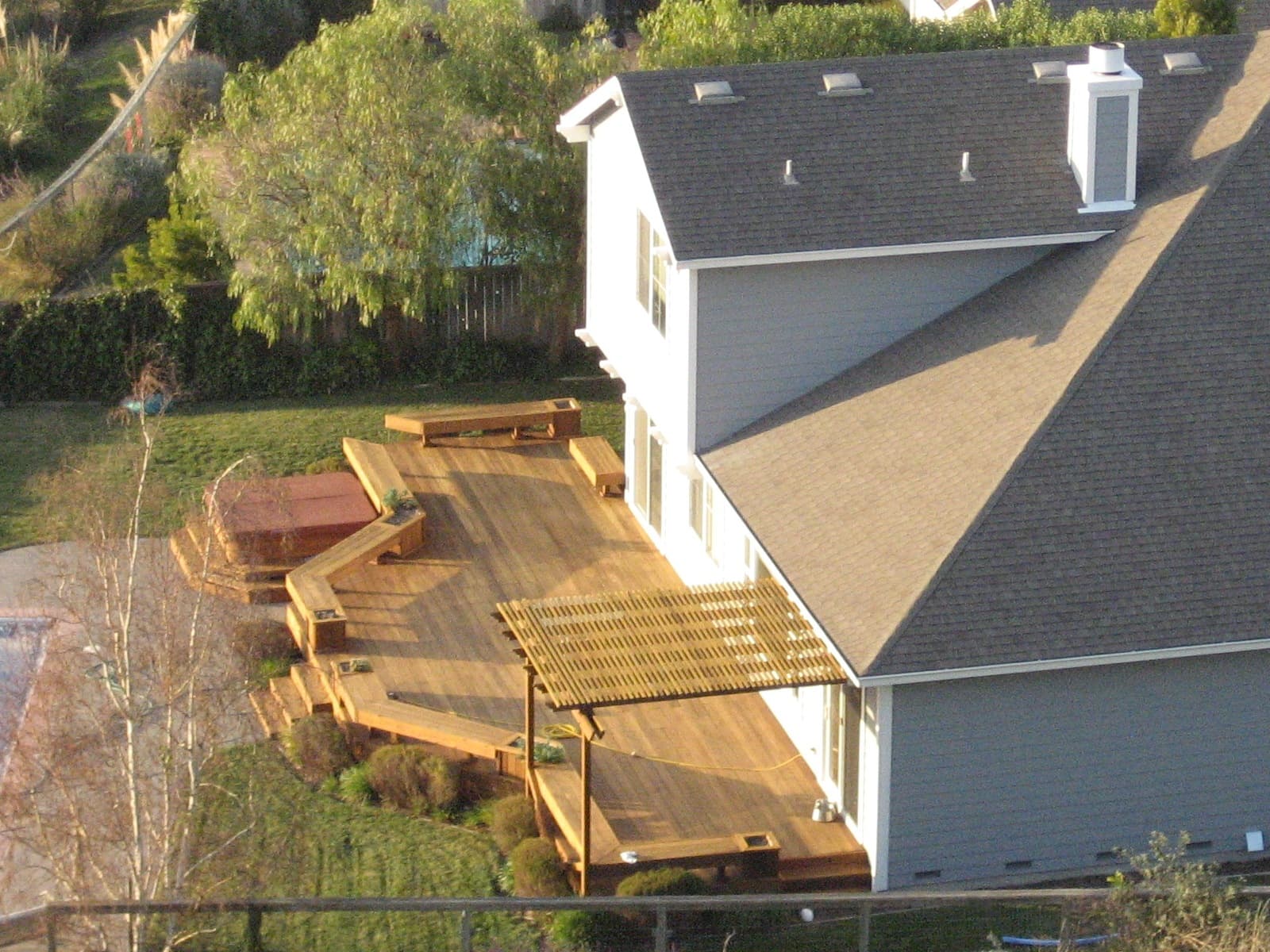
Multi-level decks for sloping Australian blocks
A slope is a plan, not a problem to bury. Cut and fill versus poles, split levels as outdoor rooms, retaining, stairs you can live on, and drainage that leaves the downhill neighbour dry.