Poolside decks: drainage, slip resistance and chemical splash
A deck beside an Australian pool is a wet edge. Drainage, grip under a wet foot, and what chlorine or salt does to timber, fasteners and finishes — before the coping photograph.
By Custom Decking editorial
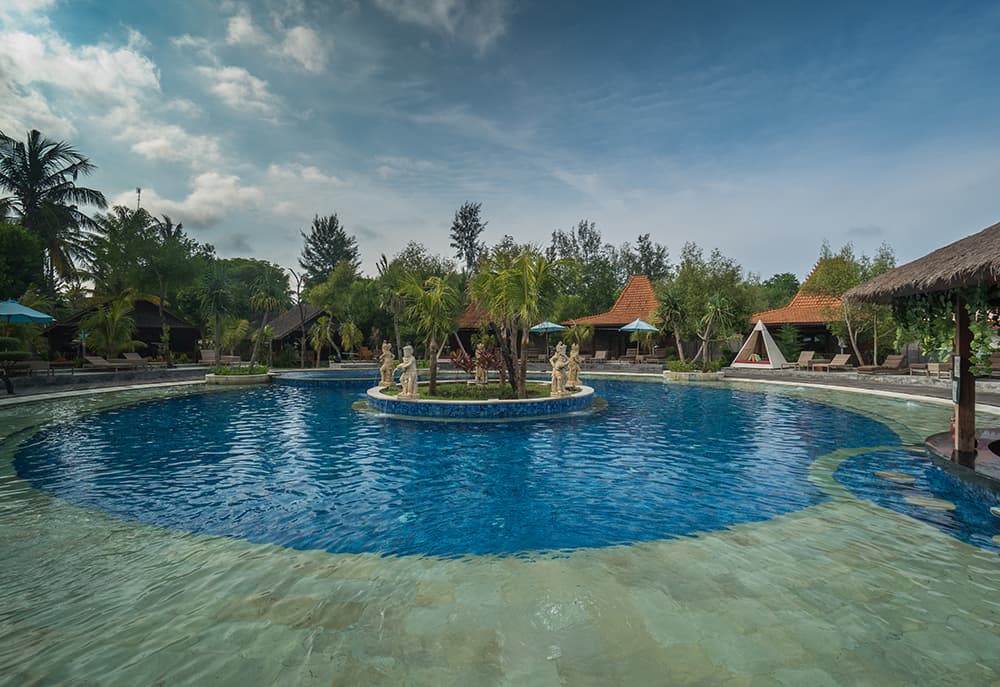
A pool wants a wet edge. A timber deck wants to dry. Those two sentences are the whole design problem, and most disappointing pool decks are what happens when a household buys the second as if it were a photograph of the first. Splash, wet feet, sunscreen, a hose, a dripping swimmer at the sliding door — that is the climate of the coping, even in a dry inland summer. Add an Australian sun that heats a dark board until it is unpleasant to cross, and a chlorine or salt system that does not care about your oiling ritual, and you have a climate and care job that starts on the drawing, not in the cleaner aisle.
If you are still choosing a wearing surface, keep the materials essays open — Australian hardwoods and composite versus timber. Fasteners and gaps are choosing decking boards and fasteners. The oiling method is the same method, with a wetter calendar: oiling and maintaining a timber deck.
The wet edge
The dangerous idea is that the deck is a continuation of the water. It is not. The water is held by a shell, a membrane, a tiling system and a waterline the pool builder warrants. The deck is a drained floor next to that shell. If you try to make timber do the pool’s job — no fall, tight against the coping, a dead-flat wide board that holds a film of splash — you will grow algae, you will swell the timber, and you will stain the stone with extractives.
A gap between timber and coping is not a style. It is a drainage and movement joint, and it is how you stop the first merbau rains from writing on the pebblecrete. End-seal the timber. Keep the first-season runoff in mind if the species bleeds. Do not butt a hardwood board to a pale limestone as if both were dry furniture.
Where the deck meets the house, the threshold is a wet-foot path. Fall should take water away from the door unless the door was designed as a wet edge, which it rarely was. A drowned sliding-door track is not a timber problem. It is a fall problem with a timber witness.
Drainage is the first drawing
Pitch the structure. Even a modest fall, consistently, so splash and rain leave. A dead-flat entertaining deck is a water table once it is also a pool surround. Wide boards cup into channels; board width is a drainage decision here, not only an aesthetic one. Narrower boards, open gaps, and a frame that already falls will disappoint you less than a 140 millimetre run laid dead level because the furniture looked calmer in a rendering.
The subfloor still has to dry. Pool decks are often low, often boxed in to hide the filter, and often close to wet soil. That is a decay pocket. Ventilate. Keep the equipment’s leaks off the timber. A filter that dribbles all season is a downpipe you installed on purpose.
Grates, strip drains and a coping detail that throws water back to the pool or to a drain are the grown-up version of this edge. Timber does not replace them. Timber sits beside them.
On a deck over a room, the membrane leads. Pool water and deck drainage are not an experiment you owe a rumpus. If the brief is a terrace over living space, the wearing surface is the last decision, not the first.
Slip resistance under a wet foot
People fall at pools. They fall on the first wet board, on the stair, on the strip that is permanently shaded by the fence. Algal film is the usual polish. Mould, algae and slip hazards is the cleaning file; this page is why pool decks grow that film faster than a dry courtyard.
A reeded or textured face earns its keep here, and only if someone will clean the valleys. A smooth hardwood face is pleasant in January and treacherous after a week of splash and shade. Composite texture is sold as grip and holds silt the same way. Whatever you specify, budget a wash as part of owning a pool, not as a spring surprise.
We will not invent a slip-rating number for a species or a brand. If the board is slimy, it is a hazard that day. Clean it. Fix the drainage and the sun strip if it returns in a week.
Bare feet also meet heat. Dark polymer and dark oiled hardwood on a west-facing unshaded apron can be too hot to cross after midday. A pergola or a sail is a materials decision. So is a lighter board. So is accepting that this edge is for shoes. Test a sample on the actual coping line in January, not in an air-conditioned showroom in May.
Chlorine, salt and the board
Domestic pools in this country are usually sanitised with chlorine, with a salt system that generates chlorine, or with another residual the pool builder specified. All of them mean splash that is not rain. The splash wets the face, dries in the sun, and leaves a residue. It weathers an oil film faster than a dry courtyard would. It can lighten some finishes and some pale species in a blotchy way if a hose-down is really a chemical rinse.
We will not invent a concentration at which spotted gum fails. We will say: keep raw chemical drums and dosing accidents off the timber; rinse accidental spills with fresh water; do not treat the deck as a bund. Read the finish manufacturer’s exclusions. Some products are simply not sold for pool surrounds. Some composite warranties exclude pool chemicals or define a distance. That sentence is part of the specification.
Saltwater pools — and coastal pools — add corrosion. Every fastener, every clip, every light fitting, every furniture frame is in a worse atmosphere than an inland dry deck. 316 stainless is the metal conversation in true salt exposure. Coated screws and mixed leftover steel are how a new pool deck stains in the first season. Dissimilar metals in a wet joint are a small laboratory. Keep them consistent.
Extractive bleed from merbau and some imports will mark pale coping and pale render whether the water is chlorinated or not. If the courtyard is pale, think twice, or isolate the runoff. The species essay is blunt about this for a reason.
Timber, composite and the coping
Hardwood remains an honest poolside surface when it can dry, when the species is durable, and when the household will oil or will accept silver plus a wash. It splinters less than neglected pine. It stays cooler than many dark polymer caps, though it still gets hot. It can be repaired board by board if it was face-screwed.
Treated pine as a pool wearing surface is a budget choice with splinter and mould manners, and a fastener chemistry problem next to salt. As a frame, kept out of the splash pocket and out of the ground at the right hazard class, it is still ordinary. Do not confuse those two lives.
Composite wins some pool briefs because it does not splinter and it does not drink splash the way an open-grain board can. It can also become too hot, and some formulations stain or lose warranty near pool chemicals. It still grows algal film. It still needs the right clip alloy. Put a sample in the actual sun and the actual splash before you buy a whole apron.
Porcelain and stone on a drained system are often the more honest wet edge, with timber beginning a step back, where feet have dried. That hybrid is a design, not a compromise, if you draw the drain.
Shade, kitchens and the rest of the deck
A pool deck is rarely only a coping. It is where the household cooks, sits and drips. An outdoor kitchen on the same plane adds grease, heat and traffic. Keep the cooking load off the wettest boards if you can. Grease plus algal film is a slip combination with a smell.
Shade that makes the water pleasant can make the timber chronically wet. Open the breeze. Leave a sun strip that dries a traffic path. Tropical pool decks, especially, should be read with tropical Queensland decks: ventilation and the wet season do not pause for a swimming season.
Termites still want the dark, wet junction. A pool deck hard against the house, closed underneath, with a leaking pipe, is a termite detail as well as a chemical one.
Fences, gates and the council
Australian pool barriers are not a decoration. A deck that raises a platform, offers a climb over a fence, or becomes the barrier itself is a safety system. The pool-safety inspector and the local rules lead. A beautiful hardwood apron that defeats the fence is not a custom deck. It is a defect.
Council approvals, DA and CDC apply when the structure is new, raised, roofed, or otherwise not exempt. Adding a deck around an existing pool is how households accidentally rebuild the barrier. Draw the fence, the gate swing, the non-climbable zone and the deck on the same page before you fall in love with a board width.
Bushfire overlays still apply if the lot is mapped. A pool does not water the BAL into silence; bushfire BAL ratings remain a construction file.
A pool deck that can dry
Write, on the quote: the fall; the gap at the coping; the species and whether it bleeds; the fastener alloy; the face texture; the finish and its pool exclusions; how the subfloor is ventilated; how a slimy board will be washed; and how the barrier still works. Then wet the sample. Walk on it. Leave it in the sun. Leave a leaf on it.
A poolside deck is a climate. Drainage is the architecture of that climate. Slip is the safety of it. Chemical splash is the ageing of it. Get those three right and the boards can be timber, or composite, or a hybrid, and they will still be a floor in March. Get them wrong and no oil will save the Saturday of the first party. If a chemical or barrier claim in this piece is out of date, send the current document to contact. We edit to editorial standards, not to a coping advertisement. The pool photograph is credited on image credits.
Questions readers ask
- Is timber a good surface right next to a pool?
- It can be, if the deck drains, the boards can dry, the species is durable, and the household will clean algal film. It is a poor surface if the coping is dead flat, the boards sit in splash all summer, and no one will wash. Timber is a wearing surface beside a pool, not a waterproofing.
- Will pool chemicals wreck a hardwood deck?
- Splash will weather an oiled face faster and can lighten or stain some species and some finishes. Saltwater pools add corrosion to every fastener and every bit of steel furniture. The usual failure is not a single dramatic bleach spill; it is a wet edge that never dries, plus the wrong screw. Read the finish tin and the pool builder’s chemical list together.
- Do I need council approval for a deck around a pool?
- Often you need to think about the pool fence, the gate and the spa rules before you think about the boards. A deck that becomes part of the barrier, or that offers a climb, is a safety and approvals problem. Council approvals and the pool-safety inspector are the documents, not a coping catalogue.
Keep reading
Related essays
Termites and deck construction in Australia
A deck is a bridge to the house if you detail it that way. How Australian termite management, inspection zones and timber choice actually meet a custom deck — without treating a species as a system.
Tropical decks in Queensland: ventilation, termites and the wet season
A deck in the Queensland tropics is a wet-season structure. Ventilation, termite management, species and the dry-season oiling window matter more than a southern maintenance calendar.
Restain, recoat or replace: deciding the next life of a deck
A tired Australian deck is three different jobs — a new stain, a new film, or new boards. How to tell which one you are actually in, and when the frame is the problem.