Choosing decking boards and hidden fasteners
Width, profile, gap, screw alloy and clip system decide whether a deck stays flat. A practical Australian guide to 86 and 140 boards, reeded faces, stainless against coated screws, and end-sealing.
By Custom Decking editorialUpdated 20 August 2025
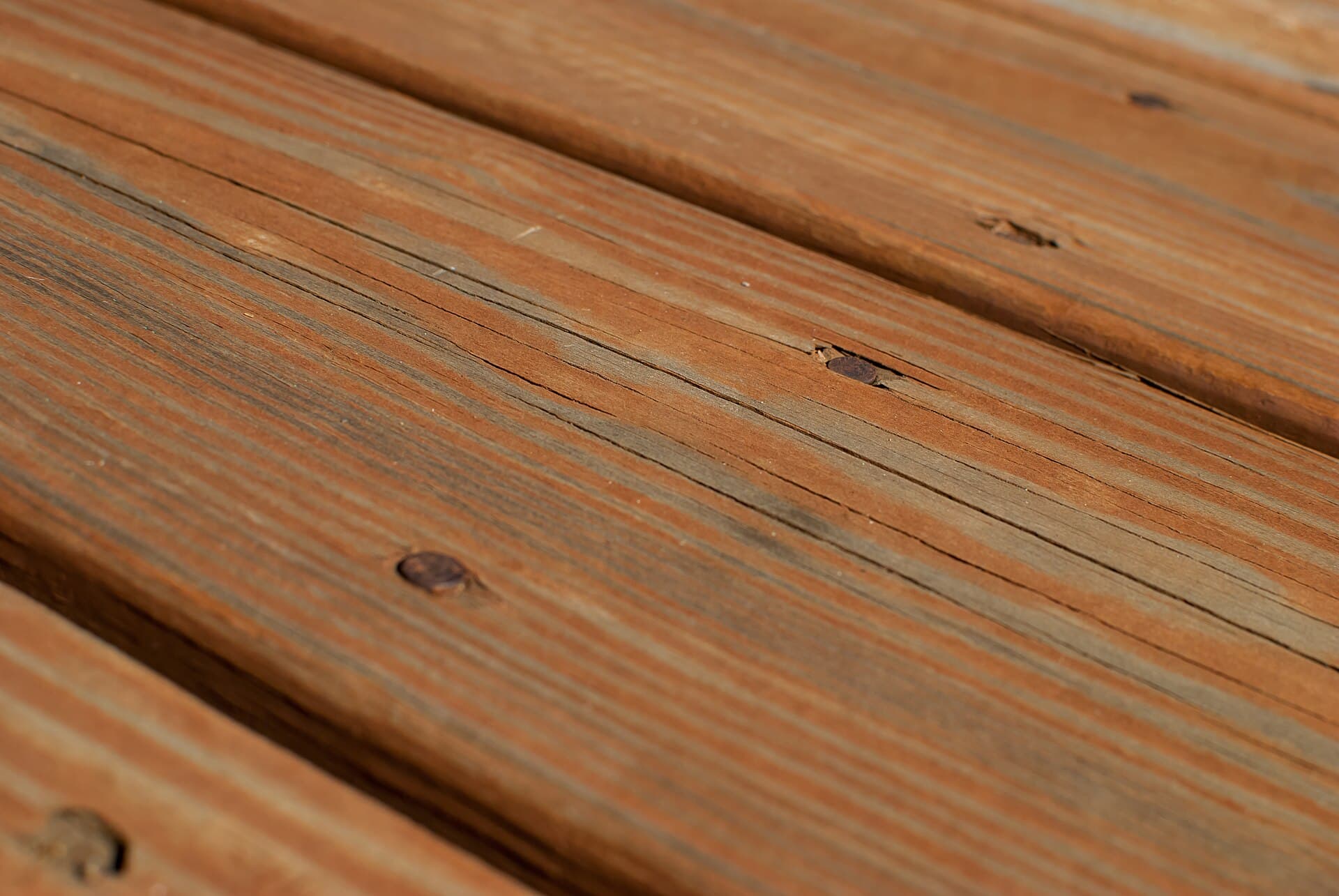
A deck is a wearing surface screwed or clipped to a joist field. Most of the arguments after handover — proud screw heads, a wave in the second summer, a board that cannot be lifted, a rust beard under every fastener — were decided when someone picked a width, a profile and a box of screws from habit. This is the unglamorous half of timber and materials: not which forest the board came from, but how it is shaped and held down.
Species still matters. Read Australian hardwoods before you fall for a wide merbau board on a clip that was designed around a softer import. Structure still matters; joist spans, bearers and AS 1684 is the pair to this essay. Salt still eats the wrong alloy, which is why coastal decks should be open if you can smell the sea from the slab.
The two widths people actually buy
Australian hardwood decking, dressed, clusters around two wearing faces: a narrow board in the mid-80 millimetre range — often sold as 86 millimetres — and a wide board around 130 to 140 millimetres. Thickness is commonly 19 millimetres on residential work, with 21, 25 and heavier profiles where the span or the traffic wants them. Pine and composite have their own catalogues. The logic below is the same even when the millimetres shift.
A narrow board is the older verandah language. More lines, more fasteners, more time on the knees. Across its short width it moves less in millimetres for the same percentage of shrinkage, so a dry summer opens a small, even gap rather than a trench. It will follow a slight radius or a shy camber. It hides a less-than-perfect joist level because each board is a small negotiation.
A 140 millimetre board is faster. It is the look of a contemporary platform and of a lot of display homes. It is also a wider piece of tangential timber trying to cup. If the boards were laid wet, the cup shows as a proud edge and a channel that holds water. If the joist centres were stretched because “it’s 19 mil hardwood”, the board springs under a heel. Wide boards want the span the manufacturer printed, or tighter. They want a moisture content that matches the climate, not the shed they sat in through a wet June.
There is no moral win. A small inner-city court in 86 millimetre blackbutt can look fussy if the architecture is a single plane of concrete and glass; a 140 millimetre run on a Federation verandah can look like a renovation that did not read the house. Choose width as a drawing decision, then make the structure obey the board.
Thickness, grade and what the joist must do
Nineteen millimetres is not a law. It is a common dressed thickness. On 450 millimetre joist centres, in a standard hardwood, it is ordinary. On 600 millimetre centres it is often optimistic, particularly for pine or for a wide board. Commercial traffic, a spa, a kitchen island — those are thicker boards or closer centres, not a hope.
Grade is the other quiet specification. Decking grade allows some feature. Structural grade on a joist is a different stamp. Do not let a pretty face on a board distract you from the fact that the joist under it is undersized. AS 1684 and the product span table are the documents. A carpenter’s “it’ll be right” is not a span table.
Composite and some bamboo systems want their own centres, often closer than timber carpenters assume. If the wearing surface changed during a value-manage, the joists may need to change with it. That is how a composite win on the quote becomes a frame variation on the invoice. The composite comparison is explicit about this: change the wearing surface and you may change the frame.
Grooved, reeded and the face you walk on
Many Australian hardwood boards are sold with a reeded or ribbed face and a smoother reverse, or with a pencil-round on both long edges and a near-smooth wear face. Reeding is grip when wet. It is also a dirt trap, a mould trap in Melbourne shade, and a surface that feels odd under a bare foot once the ridges wear unevenly.
A smooth or lightly dressed face is easier to keep and nicer to sit on. It is more slippery with algal film, which is a maintenance problem, not a reason to reed every board in a dry climate. Poolside and south-facing wet courts are where a texture earns its keep, and where algal film on a smooth face becomes a slip problem rather than a style one.
Side-grooved boards exist for hidden clips. The groove is a designed slot, not a defect. It reduces the edge section, which is why clip manufacturers talk about species and thickness. A deep groove in a thin pine board is a different product from a shallow groove in 21 millimetre spotted gum. Do not cut your own groove on site to suit a clip you bought later. You are inventing a profile no one has spanned.
Stainless, coated and the screw you can still stand on
Face-screwed hardwood is still the repairable Australian default. Two screws per joist on a 140 board, one or two on a narrow board depending on width and the carpenter, pre-drilled, with a head that sits flush and not proud. Proud heads catch toes and chairs. Countersinks that go through the wearing face collect water.
Alloy is the decision that shows up as stain.
- 316 stainless is the marine grade. Breaking surf, exposed coastal decks, any job where salt sits on the metal. It costs more. It is cheaper than a rusted field of 304 in year six.
- 304 stainless is the inland hardwood default and is used on milder coastal jobs by people who like living dangerously or who are genuinely a few suburbs back from the spray.
- Coated class-3 or similar screws are the treated-pine inland product, and only when the coating is rated for copper-treated timber. They are not a stainless substitute at the beach.
- Bright steel, zinc yellow, whatever is in the leftover tub — no.
Dissimilar metals in one wet joint are a corrosion cell. A stainless screw through a galvanised hanger into copper-treated pine, with a puddle, is a small laboratory. Keep the metals consistent, or isolate them as the hanger manufacturer drew.
Screw length should bite the joist properly without punching through a thin member into a space you will later see. Head type is a preference until it is a splinter: square and Torx sit better than a chewed Phillips in hardwood.
Hidden clips
Clip systems hold the board from the side groove or from a biscuit in the edge, and they leave the wear face clean. Architects like them. Photographers like them. Carpenters who have to replace the third board in from the house in year four have a more complicated relationship.
A clip system is a system. The clip, the groove, the recommended gap, the joist width (some clips need a wider landing), the starter board detail, and the species list the manufacturer will warrant. Mixing a clip from brand A with a board from brand B because both are “hidden” is how you get chatter — a board that ticks in the heat — and a pull-out you cannot argue.
Advantages: clean face; some allowance for movement; fewer water-holding screw holes. Disadvantages: cost; a first and last board that often still need a face fix; a middle-board replacement that can mean sliding a run; less forgiveness in a very hard timber if the clip was designed around a softer one; plastic clips that age in ultraviolet light if they ever see it; metal clips that need the same alloy discipline as screws.
In coastal work the clip is a fastener. Specify 316 if the screws are 316. In bushfire work a plastic clip may be part of a combustible system even if the board is a listed hardwood. Ask the certifier before you fall in love with the clean face.
Gaps
The gap is not a style. It is a drainage and movement joint. Typical hardwood face-fixed work sits in a few millimetres — often something like three to six — set for the moisture content on the day and the species’ manners. A wet board needs room to shrink without opening a Toby-the-dog gap. A dry board needs room to swell without peaking.
Composite and aluminium want the gaps their manuals draw, including the longer end-gaps that timber carpenters sometimes forget. Butting a polymer board to a rendered wall because it looked tight on a hardwood job is a callback.
Gaps collect seed, silt and embers. Too tight and the deck cannot dry. Too open and the space below is a litter tray and, in BAL country, a path for fire. AS 3959 has views on gaps at higher BAL. That clause, not a guess on site, is the document.
Run-off should fall. A dead-flat wide board with a tight gap and a reeded face is a water table. Pitch the structure, even a little, or accept that you are washing more.
End-sealing
Cut end-grain is a set of tiny straws. It takes water in and lets it out faster than the dressed face. That is how you get a crop of splits at every butt joint and every trim against the house. End-seal on the day of the cut: a wax emulsion, a manufacturer’s end-coat, or the penetrating oil you are using on the face, worked in and not forgotten on the last ten boards of a Friday.
Merbau and some other extractive-rich imports will still bleed through a sealed end in the first rains, but they bleed less onto the neighbour’s render if you tried. Pine wants a preservative end-cut treatment as well as a sealer, because you just removed the stamped, treated face. Hardwood wants the moisture movement slowed. Different chemistry, same habit: every cut.
Butt joints should land on a joist, or on a dedicated land, and should not be so tight that two sealed ends have nowhere to go when they swell. Stagger joints so you do not build a single seam across the deck that everyone walks.
Board orientation and the way water leaves
Lay boards to shed water toward the garden or the drain, not toward the house door, unless the threshold was designed as a wet edge — which it rarely is. On a waterproofed deck over a room the fall is a legal and a practical fact; the boards are a wearing surface on a drained plane, not the plane itself.
The bark-side-up debate will outlive all of us. Some of the oldest verandahs in the country have boards both ways and have lasted. What fails boards is a reeded face laid as the underside so water sits in the ribs against the joist, a waney edge left in the weather, or a board so bowed it was levered down with a screw and a curse. Choose the best face that is also the wearing face the mill intended. Reject the banana. Do not invent a folklore to save a twisted stick.
Straightness of the first board is the job. A run that starts shy of square becomes a taper you can see from the kitchen. Dry-fit, string, and accept that a custom deck on a house that is not square will need a rip somewhere. Hide the rip against a wall or a planter, not in the middle of the entertaining space.
Fastener pattern and the house junction
Keep a consistent set-out so the eye reads a rhythm. Random screws are a tell. So is a double joist that was added to catch a butt, then ignored by the next row. At the wall, the last board should not trap a gutter of water against flashing. Leave the gap the flashing detail wants. If the deck is attached, the ledger and the waterproofing of that ledger are a structure problem that kills houses when it is guessed.
Do not face-fix through a membrane. Do not clip into a joist that is already showing decay. Do not use a longer screw “to be sure” and punch the soffit of a verandah that someone painted last month.
A specification you can hand over
Write, on the quote: species and grade; profile and dressed size; target moisture; face (reeded or smooth); fastener type, alloy and brand; clip system if any, named; gap range; end-sealer; and how a damaged board will be replaced. Then walk the first ten boards with the carpenter. If the heads are proud, stop. If the gap is a business card in one bay and a finger in the next, stop.
Boards and fasteners are where a custom deck becomes a floor you can live on. The forest chose the timber. You still have to choose the millimetres and the metal. For the wider choice between polymer and timber, use the composite versus timber essay. Picture credits for the texture on this page sit on credits; factual corrections come in through contact.
Questions readers ask
- Should I choose 86 millimetre or 140 millimetre decking?
- Narrower boards move less across their width, follow a camber more easily and look traditional. Wider boards lay faster and read as a contemporary floor, but they cup more readily if the joist centres or the moisture content are wrong. Match the width to the span table and the architecture, not to a photograph of someone else’s courtyard.
- Are hidden clips better than face screws?
- They are cleaner on the eye and they let a board move if the system is installed as designed. They are worse when you need to lift a middle board, when the species is too hard for the clip, or when a coastal job was quoted with the inland clip. Neither method is a substitute for the right gap and the right joist.
- What screws should I use near the beach?
- Use 316 stainless for true marine and breaking-surf exposure, and be honest about how close “near” is. 304 stainless is the inland and mild-coast default for hardwood. Coated screws belong in treated pine inland, and only if the coating is rated for the treatment. Do not mix leftover bright steel into any of those jobs.
Keep reading
Related essays

Imported hardwoods versus Australian-grown timber
Merbau, keruing and the other imported boards can be honest. They can also be illegal, unstable in Australian sun, or a missed job for a local mill. How to tell the difference.
Bamboo, aluminium and the other decks people ask about
Strand-woven bamboo, aluminium boards, porcelain on pedestals and recycled plastic all turn up in Australian quotes. What they actually are, where they fail, and the warranty clauses that matter.
Treated pine decks: when they make sense, and when they do not
Treated pine is the default Australian deck frame and a questionable wearing surface. H3 against H4, the CCA story, copper azole, paint, expected life and the bushfire limits that end the argument.