Choosing a deck builder: quotes, contracts and red flags
A deck quote is not a vibe. It is a licence, a scope, a deposit and a set of exclusions. How to compare builders under Australian consumer law without treating a handshake as a contract.
By Custom Decking editorialUpdated 15 January 2026
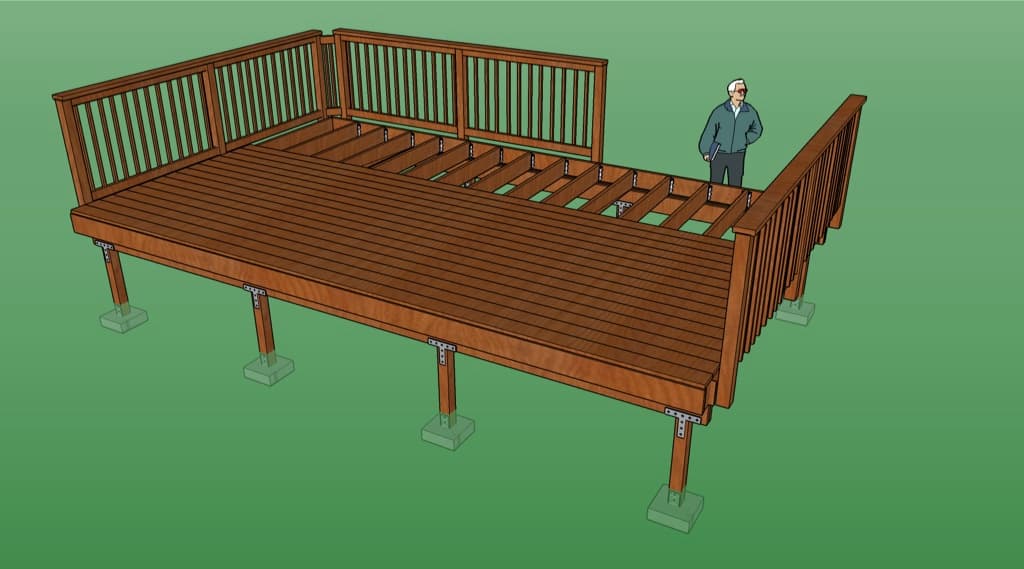
The builder is the difference between a deck that lasts and a platform that becomes a dispute. Timber choice, joist centres and oil matter. So do a licence you can look up, a quote that names the same job the neighbour's quote named, a contract you are willing to read, and a deposit that is lawful. This essay sits in outdoor living because choosing the person is part of living with the result. It sits next to design and planning because a good builder will not save a brief that was never drawn.
Nothing here is legal advice. Australian consumer law, state building Acts and the contract you actually sign are the documents that govern a dispute. We can tell you what to ask and what should make you walk away. A solicitor or a community legal service can tell you what your particular paper means. If the job is large, read the contract with someone who is not the builder.
Licences, and the registers that exist
A person who can swing a hammer is not licensed to contract for a deck in every state. The registers are public. Use them.
In Queensland the Queensland Building and Construction Commission — QBCC — licences the contractors who can do this work, and it runs the home-warranty scheme that attaches to many domestic jobs over the published threshold. Look up the licence number, the class, and whether it is current. A carpentry licence is not a blank cheque for every structure; a builder licence is not proof the person has built a first-floor terrace over a living room.
In New South Wales the contractor licence sits with Fair Trading. The class and the nominated supervisor matter. Owner-builder permits are a different path with their own duties; they are not a way to let an unlicensed crew “help”. Home building compensation cover applies above a threshold. Ask for the certificate before you pay a deposit that assumes it exists.
In Victoria the Victorian Building Authority — VBA — registers building practitioners. A registered builder and a registered carpenter are not the same ticket. A deck that needs a building permit wants a practitioner who can be on that permit. A handy neighbour is not a practitioner.
The other states and territories have their own registers — the licence or registration is still the first search, not the Instagram grid. If the job is in the ACT, Tasmania, South Australia, Western Australia or the Northern Territory, find the local building regulator and search the name. Do not accept a licence from a different state as if it were local. Reciprocity, if it exists, is a fact you check, not a story you are told on the kerb.
Insurance is the next document. Public liability is ordinary. It is not the same as home-warranty or home-compensation cover, and it is not the same as income protection the builder holds for themselves. Ask for certificates of currency. Ask who the insured is. A policy in a company name that is not the contracting entity is a paper you have not got.
What a quote has to name
A useful quote is a specification with a price. A useless quote is a square-metre number and a smile. You want, at least:
The structure — footings, posts, bearers, joists, sizes, centres, timber grade and treatment. The wearing surface — species, profile, width, fastener, gap. The edge — balustrades, including glass systems if they are proposed, and who engineers them. The way up and down — stairs, landings, and any ramp or threshold work. The shade — pergola or louvred roof as a line item or a clear exclusion. Services — who does gas, power and water if there is an outdoor kitchen or heating. Approvals — who lodges, who pays, who stops work if the council says no.
Also name the finish. Oiling is often excluded, which is fine if you know it. Fastener alloy is often fudged. “Stainless” is not a grade. Coastal and poolside jobs want the grade written. Poolside decks and composite versus timber change the product and the warranty; those names belong on the quote.
Australian hardwoods should appear as a species, not as “hardwood decking”. Hardwood is how a merbau parcel lands on a job that was sold as spotted gum. If the quote allows a substitute, write who chooses it and on what notice.
Three quotes are useful only if they describe the same deck. Send the same drawing. If you have no drawing, pay someone for a simple plan before you shop the price. Comparing a 19 millimetre blackbutt on 450 centres with a 21 millimetre spotted gum on 400, one with a roof and one without, is not shopping. It is confusion with a spreadsheet.
Contracts, deposits and the law that sits over both
Domestic building work in Australia is not a handshake market, whatever the industry's folklore. Each state sets thresholds above which a written contract is required, forms that must be used or information that must be given, and rules about deposits. The numbers move. We will not print a deposit percentage here as if it were eternal. We will say: there is a legal maximum in the jurisdiction, it is not “whatever we agree”, and a builder who wants more than that in cash is giving you a reason to leave.
Pay the deposit the way the contract says, to the entity on the contract, with a record. Do not transfer to a personal account because the “company account is being sorted”. Do not pay the whole job before the footings are in. Progress payments against defined stages — footings, frame, decking, completion — are ordinary. Payments against “we’ve been on site a week” are how you fund someone else's next job.
Australian consumer law — the national regime that sits in the Competition and Consumer Act — still applies. Consumer guarantees about due care and skill, fitness for purpose and acceptable quality do not vanish because a clause says “no warranty”. Unfair-contract-term rules can strike at one-sided paper, especially where the household is a consumer and the builder is the one who wrote the form. None of that is a reason to sign a bad contract and hope the statute will save you. It is a reason to refuse clauses that let the builder vary the price at will, walk away without consequence, or make you responsible for their insurance.
Cooling-off rights exist for some domestic building contracts in some states. If they exist on your job, use the period to read, not to book the crane.
This is not legal advice. If the contract is long, the job is over a living space, or the builder is pushing you to sign on the bonnet, take the paper to someone who answers to you.
Variations, delays and the conversation you have before the slab
A variation is a change to the agreed work. Extra steps, a longer return, a switch from pine joists to steel, a waterproofing membrane nobody mentioned, a council condition that adds a screen — all variations if they were not in the scope. The honest path is a written description, a price, an effect on time, and a signature or a clear electronic agreement before the extra work starts. The dishonest path is “we’ll sort it out at the end”, which is how a household discovers the extras are the profit.
Some variations are the household's fault: a fire pit decided after the joists, a kitchen that was “just a barbecue” on the first quote, a glass balustrade upgrade sold on site. Own those. Price them before they are built. Some variations are the builder's discovery: rock, a drain that was not on the plan, a rotten ledger on the house. Own the reality. Still price it.
Delays want a clause you can live with. Weather, approvals and imported composite lead times are real. A builder who will not talk about time at all is a builder who will disappear in a wet spring. A builder who promises a party date before the application is lodged is selling a cake they have not turned the oven on for.
Council approvals should be in the contract as a responsibility. Who lodges the CDC or the DA, who pays the fees, what happens if the application fails, and whether the builder starts without the stamp. Starting without the stamp is a red flag with a council file number waiting to happen.
Red flags that are not a matter of taste
Walk away, or at least slow down, if any of the following turn up and are not immediately fixed in writing.
No licence number, or a number that does not match the person in front of you. A company name on the quote and a different name on the invoice. A deposit over the legal cap, or a request for cash. No address that you can find. A start date of “next week” on a job that needs approval. A refusal to write the species, the fastener or the balustrade standard. A quote that says “owner to supply timber” on a job the owner cannot inspect. Pressure to skip the contract because “we know the street”. A request that you lie to the certifier about a roof, a fireplace or a first-floor membrane. Photographs of other people's work with no sites you can visit. A review profile that is all first names and no streets.
Less theatrical, still serious: a builder who has never done a courtyard job quoting a terrace as if it were a backyard; a builder who has never done a deck over a room quoting a waterproofed terrace as if it were a garden platform; a builder who shrugs at Melbourne weather or at a BAL overlay as if climate were a finish schedule.
You are allowed to ask for a site you can visit, a supervisor who will be there, and a written warranty that says what happens when a board fails. You are allowed to say no.
How to brief so the quotes can be honest
Write the use. Entertaining, a quiet court, a winter room, a path for a frame, a pool edge. Write the climate you actually have. Write the overlays — heritage, bushfire, flood, easement. Write the neighbours you can already hear. Then write the materials you will accept and the ones you will not. A household that wants a pale hardwood and no oil is not a materials problem. It is a brief that needs a conversation before anyone prices a board.
Ask each builder the same questions. Who applies for approval. Who does the gas. How a middle board comes out. What happens if the hardwood parcel is twisted. Who oils, and with what. How wet-weather days are counted. Who is on site. What the public liability covers. Where the waste goes. If the answers are stories and the other builder hands you a two-page scope, you have already compared them.
The journal's job is to help you ask. About is who we are; editorial standards is how we correct a licensing or consumer-law note when a regulator changes the form. Send the current document through contact. If you are a practitioner with a documented contract lesson that is not an advertisement, write for us. Lighting and the rest of the living file will not save a job that was let to the wrong name. The contract might.
Questions readers ask
- Is the cheapest deck quote the one I should take?
- Only if the scope, the timber, the fasteners, the approvals and the exclusions match the dearer quotes. A cheap number that leaves out the balustrade, the council fee or the stainless screws is not cheap. It is a different job.
- How much deposit should a deck builder ask for?
- States cap deposits on domestic building work, and the cap depends on the contract value and the jurisdiction. Ask what the current legal limit is, and do not pay cash into a personal account to “get a better price”. If the figure feels like buying the whole job up front, stop.
- Does a text message count as a variation?
- A variation should be written, priced and agreed before the work changes. A text can be a record if it is clear. A wave at the slab is not. Australian consumer law still sits over the contract, but you do not want to test that from a half-finished frame.
Keep reading
Related essays
Small courtyard decks for inner-city terraces
A Paddington, Fitzroy or West End court is not a suburban platform scaled down. It is a floor, a drain, a neighbour and a clothesline arguing in a few metres.
Accessible decks: ramps, thresholds and ageing in place
A deck that only works for people who can step a lip, climb a flight and see an unlit tread is a short-term room. Ramps, landings and honest thresholds are how a platform stays in use.
Heating, fire pits and using a deck in winter
A southern deck that only works in January is half a room. Fire, radiant heat and a wind-break can keep timber in use through June — if the hearth, the neighbour and the overlay allow it.