Lighting a deck so it works after dark
Night is when a deck earns its keep or becomes a hazard. Low-glare light, stairs you can still see, AS/NZS 3000 in general terms, and the honest difference between solar stakes and a hardwired circuit.
By Custom Decking editorialUpdated 3 September 2024
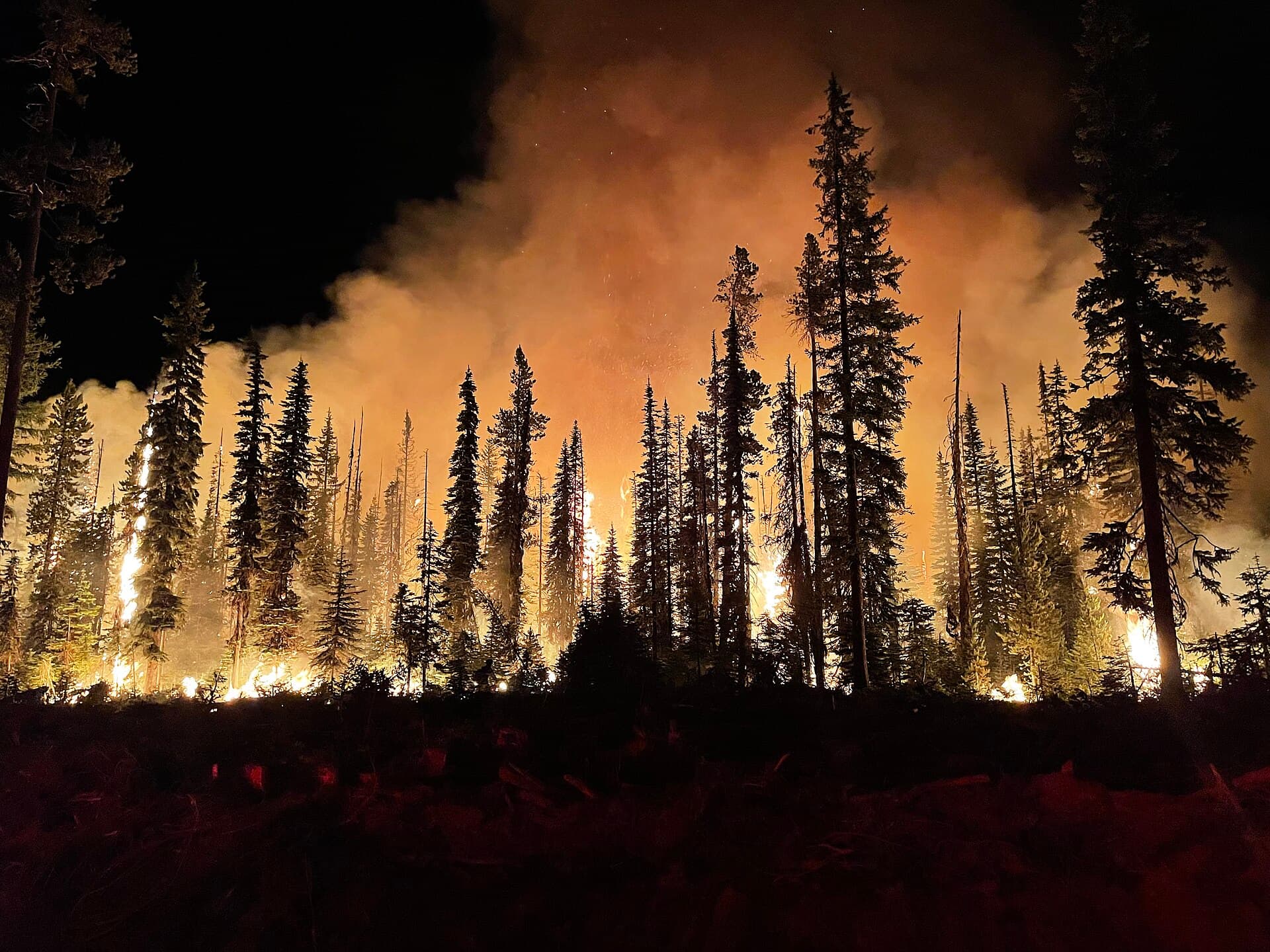
The photograph on this page is a night fire on a ridge: a small, serious glow and a great deal of darkness. It is here as a study, not as a threat and not as a product. After dark, a deck is the same kind of picture. Most of the platform should stay dark. The parts that must be seen — a nosing, a landing, the edge of a table, the path to the door — should glow enough that a guest in socks can use them. Everything else is glare, insects, and a neighbour’s complaint.
This essay sits in structure and building because lighting on a deck is an installation and a safety problem before it is a mood. Stairs are the first place it earns its keep. The design hub decides whether the deck is a summer room or a winter one; heating and fire pits will want their own light, and their own clearance. The fire in the photograph is also a reminder to read bushfire BAL ratings as a separate file. Lighting does not make a deck bushfire-resisting. It can, if it is sloppy, add a heat source and a cable where you did not want one.
Darkness is a material
Australian suburbs are already bright. A deck that adds another unshielded flood does not become safer; it becomes a stage that makes the steps beyond the beam invisible. The eye adapts to the brightest thing. If that thing is a lantern in the middle of the view, the treads at the edge go black. Low-glare lighting is not a style. It is how you keep adaptation on your side.
Light the walking surface, not the air above it. A warm source close to the boards — a recessed tread light, a shielded step light in a riser, a linear fitting under a bench or a rail — shows the place a foot will land and leaves the rest of the garden to the moon. Cool, harsh light on a timber board makes every oil streak look like a fault and every moth a guest. Warmth in the 2700 to 3000 kelvin band is the usual outdoor-living choice. We are not going to pretend a single lux number suits every terrace; the point is enough contrast to see a change of level, not enough brightness to read a newspaper in the far corner.
In a small inner-city court the neighbour is close enough to share your circuit in spirit. A fitting that can be seen from their pillow is a bad fitting, however legal. Shield, aim down, and put it on a dimmer or a late-off timer. Privacy screens and dividing fences will not rescue a flood on the first floor.
Stairs, landings and the edge you must see
If the deck is more than a step above the ground, the stair is the hazard. Consistent risers are wasted if the nosing disappears. Mark the treads: a small shielded fitting in each riser, a strip along one stringer, a pair of lights on the landing that do not stare into the eyes of the person coming up. The top and bottom landings need to be obvious. A door that opens onto a stair needs the landing lit before the door is used, which usually means the switch is inside, or the circuit is automatic.
Barriers and glass rails catch light. A source aimed at frameless glass will flare and hide the drop beyond. Light the floor at the barrier, not the pane. A low wash along the inside of a timber rail is enough to stop someone backing into the edge with a plate.
Pool edges are a third night problem. Water is a dark hole until it is lit, and then it is a glare hole. Poolside decks want the walking surface and the coping readable, and they want the pool barrier still obvious — a gate latch you can find without a phone torch. Submersible lights are a pool electrician’s job, not a decking variation.
AS/NZS 3000, in the terms a householder can use
The Wiring Rules are a licensed electrician’s document. The household version is short. Mains cabling on, over or under a deck is an electrical installation. It wants RCD protection, fittings with an IP rating that matches the weather they will actually see, cables that are supported and protected rather than laid on soil, and isolation that someone can find. Outdoor is a wet, hot, ultraviolet place. A bathroom downlight in a cheap cover is not an outdoor fitting.
Extra-low voltage — the 12 volt LED strips and garden spikes that fill catalogues — is still an installation once it has a transformer on the house and a cable in the ground. The transformer wants a ventilated, legal location, not a biscuit tin under the boards. The cable wants protection from a shovel and from the sharp edge of a joist. Low voltage reduces one kind of shock risk. It does not make a crushed, wet joint a good idea.
Do not staple flex to a joist and feed it through a wall plate into a power point. Do not hide a junction under a board you have no intention of lifting. Do not run a lead to a barbecue and leave it there for a season. Outdoor kitchens want their own circuits, their own isolation, and a conversation with the electrician before the plumber sets the bench.
A licensed electrician applies AS/NZS 3000 and the state licensing rules. A certifier may want to see the lighting on a high deck if it is part of a required safe path. We do not print a wiring method here. We do say that a builder who “does a bit of electrical” is not an electrician.
Solar against hardwired
Solar deck lights sell because they avoid the electrician. A small panel, a small battery, a small LED. On a north-facing, unshaded cap they will make a polite mark on a summer evening. On a south-facing, tree-shadowed Melbourne deck in July they will make a polite mark at dinner and then fade. Dirty glass, a panel aimed at a pergola, a fitting that wandered under a chair — the system fails in the season you use the deck most after dark.
Use solar where failure is an inconvenience: a decorative wash on a planter, a path across a lawn that also has another light, a table lantern you can replace with a candle. Do not use it as the only light on a required stair, as the only mark of a high edge, or as the light a guest will need to find the back door. Those jobs are hardwired, on a circuit you can test, with a fitting you can still buy in five years.
Hardwired is not a synonym for harsh. LED has made low wattage and warm colour ordinary. Dimmers, two-circuit schemes (a dim path and a brighter table), and sensors that bring the stair up when someone opens the door are all available to a competent electrician. The cost is the first cost. The saving is that the light is there on a wet, overcast night when every solar cap is an ornament.
Hybrid thinking is fine: a hardwired stair and door, solar on the far garden, a lamp you carry to the table. What is not fine is a quote that says “solar lighting throughout” on a two-metre-high deck and no other proposal.
Heat, fire and the cable you forgot
The night photograph is a fire. A domestic fire pit or outdoor heater is a smaller, closer glow, and it still wants clearance from a fitting, a cable and a timber soffit. Do not clip a festoon to a beam above a fire bowl. Do not hide a transformer behind a heater. Gas and electricity on the same deck are two trades; they should know about each other before the night of the first roast.
Festoon bulbs and party strings are how a lot of Australian decks are actually lit in December. They are charming and they are temporary until they are left up until Easter, UV-rotted, and taped at a join. If you want a permanent festoon, specify an outdoor-rated cable, proper support, and a fitting the electrician will put on the certificate. If you want a temporary one, take it down.
In mapped bushfire country, lighting is not a BAL solution and it can be a BAL problem: plastic fittings, exposed cabling, a transformer in a leaf-filled corner. Keep the electrical conversation inside the same overlay conversation as the boards and the posts. Ember does not care that the glow was meant to be festive.
Where the light goes, practically
A working scheme is usually three layers, none of them bright.
Path and stair: the required light. Shielded, low, repeated so a single failed lamp does not black out the route. Switched from the house, or automatic, or both.
Task: the table, the kitchen bench, the barbecue hood. A pendant under a pergola, a wall light aimed at the board, a fitting on the underside of a shelf. This is the light you turn up when you cook and down when you sit.
Ambient: a wash on a wall, a soft mark in a tree, the glow from the house through the glass. Ambient is what makes the deck feel like a room. It is also what becomes glare if you let it.
Post-cap lights look like a solution and often become four small lighthouses. Use them dim, or skip them. Under-rail linear tape is useful if it is in a profile, outdoor-rated, and serviceable. Recessed floor lights collect water and dirt; use them where the manufacturer drew a drain and where you will clean them. Uplights in a garden can mark a trunk; uplights under a table mark every insect in the suburb.
Maintenance is part of the specification. LED lasts longer than the story on the box once heat and ultraviolet have had a summer. Choose a fitting you can still get a lamp or a module for, or a complete fitting cheap enough to replace. Write who owns the circuit after handover.
Specifying night as well as noon
Write the purpose of each circuit: stair, table, garden. Write hardwired or solar, and do not let solar take the stair. Write IP ratings in general terms the electrician will refine. Write dimming, the switch locations, and whether a sensor is allowed to surprise a guest. Write that cables are not an afterthought in the joist zone. Then walk the deck at night before you pay the last invoice, with the house lights off, in the shoes a guest would wear.
A deck that only works at noon is half a room. Structure, in this file, is the circuit and the safe path, not the joist size. The materials of the board will take whatever colour you throw at them; the people on the board need to see the next step.
If an electrical or NCC claim in this piece is wrong, send the current AS/NZS 3000 or Housing Provisions reference to contact. We correct against the document, not against a lighting catalogue. The rules we edit to are on editorial standards. The night photograph is credited on image credits.
Questions readers ask
- Are solar deck lights enough for stairs?
- Rarely, if the stair is the required path off a raised deck. Solar fittings are extra-low voltage and simple to put down, but they dim when the panel is dirty, shaded or facing the wrong sky, which is often when you need them. A hardwired, RCD-protected circuit designed for the treads is the honest answer on a stair that can injure someone.
- Do I need an electrician to light a deck?
- For anything on the mains, or any extra-low-voltage system that is part of the house wiring, yes. AS/NZS 3000 is applied by a licensed electrician. Stake-in solar lamps that never join the installation are a different, weaker category. Do not run an extension lead under the boards and call it a circuit.
- How do I light a deck without annoying the neighbours?
- Keep the source low, shield it, and light the surface you walk on rather than the air. A flood on the fascia that can be seen from a bedroom across the fence is a privacy problem. Warm, dimmable fittings aimed at treads, the table and the kitchen bench will do more work than a bright lantern on a post.
Keep reading
Related essays
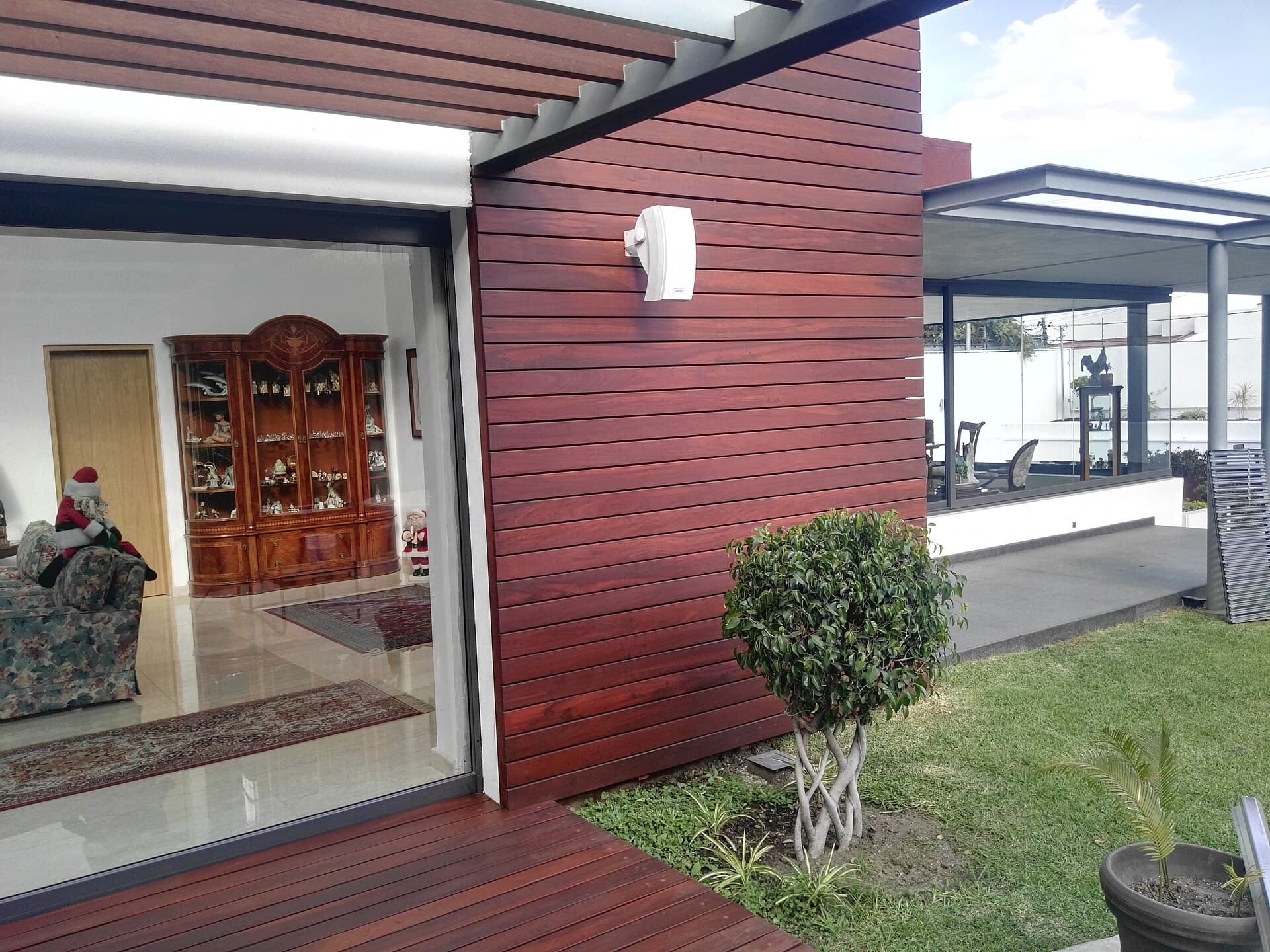
Waterproofing a deck over a living space
A deck over a room is a roof. Falls, membranes, outlets, thresholds and the wearing surface that must not destroy the work underneath — AS 4654, the NCC, and the Australian climate that will test all three.
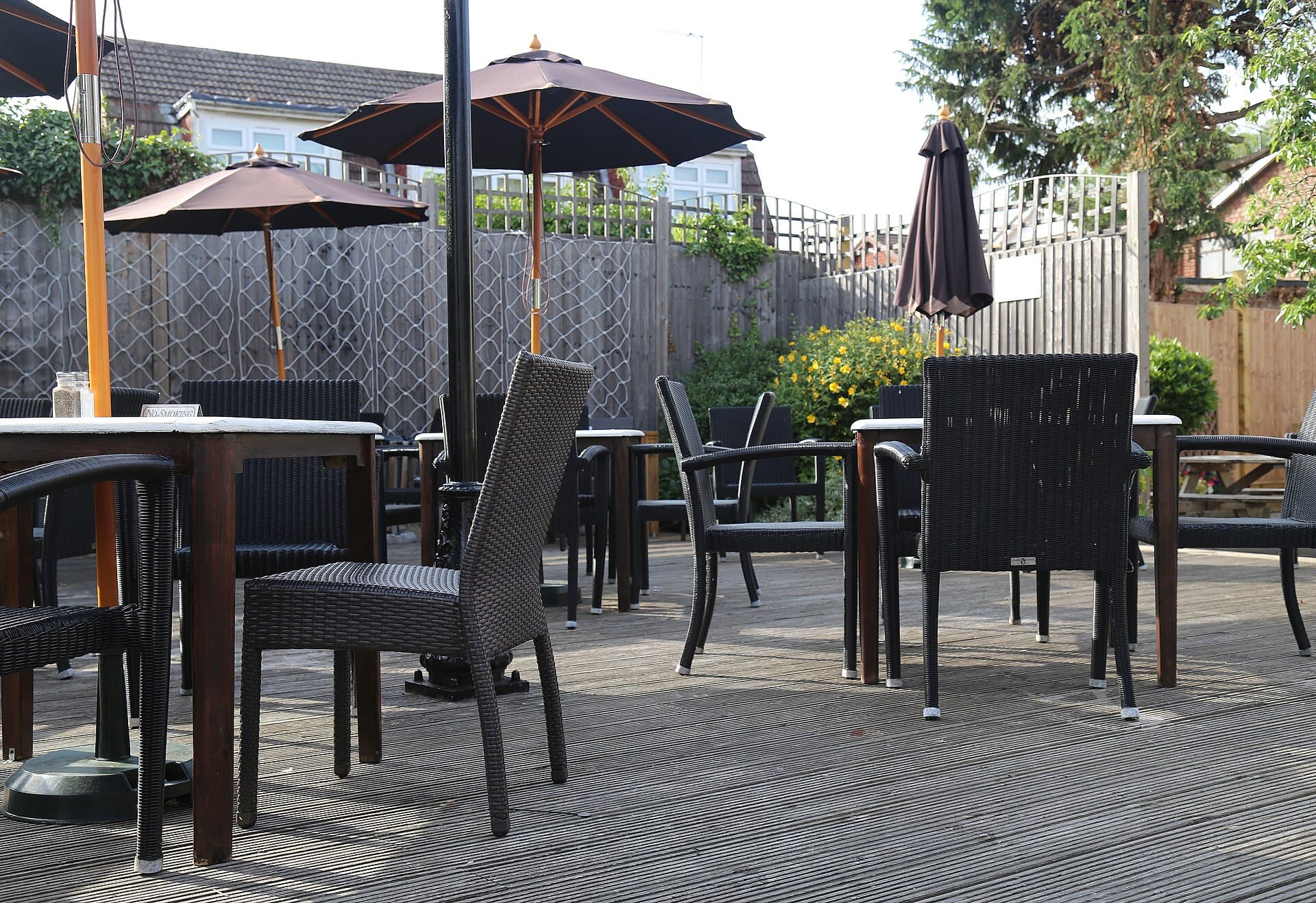
Balustrades, glass and the National Construction Code
When a deck needs a barrier, what height and openings the NCC requires, how glass and wire actually get specified, and why a pool fence is a different standard from a balustrade.
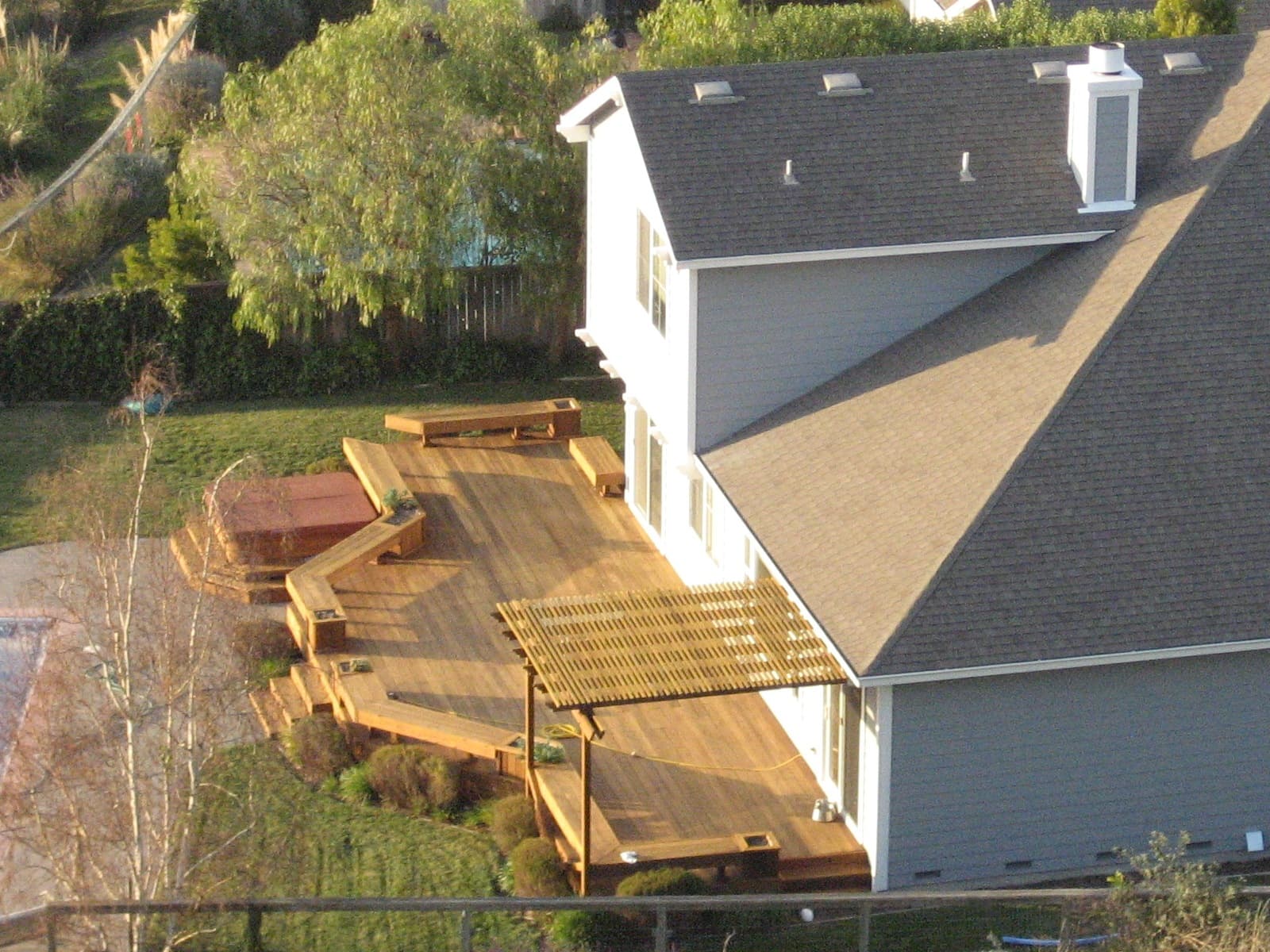
Stairs, landings and safe access on a deck
Stairs are where decks injure people. NCC geometry, consistent risers, landings at doors, handrails, slip, lighting and the difference between a garden step and a required stair — written for Australian platforms.